
Start With Who Will Use the Space, Not the Equipment List
An adult indoor playground is a commercial recreation space designed around active movement, physical challenges, competitive games and shared social experiences. Unlike conventional children's soft play centers, an indoor playground for adults may incorporate larger obstacle systems, climbing activities, trampoline courts and group challenges selected for adult participation. That definition describes a direction for the venue, not a list of items to order.
A brief that starts from the equipment list skips the decision that shapes everything else: who is expected to take part and at what challenge intensity. Two venues can order similar attraction families and still operate as different businesses, because one is built for corporate groups working through timed obstacle routes while the other is built for friends rotating between short competitive games and spectator seating.
Write the participation profile as statements, not adjectives. State the primary participant group the venue is designed for, then state the challenge intensity the activities should demand of that group. The operating model follows from those two statements: how visitors arrive and check in, how sessions are briefed, how groups rotate between activities, and how staff supervise and reset each zone. Once these sentences exist, an attraction can be tested against them instead of being added because it looked convincing in a rendering.
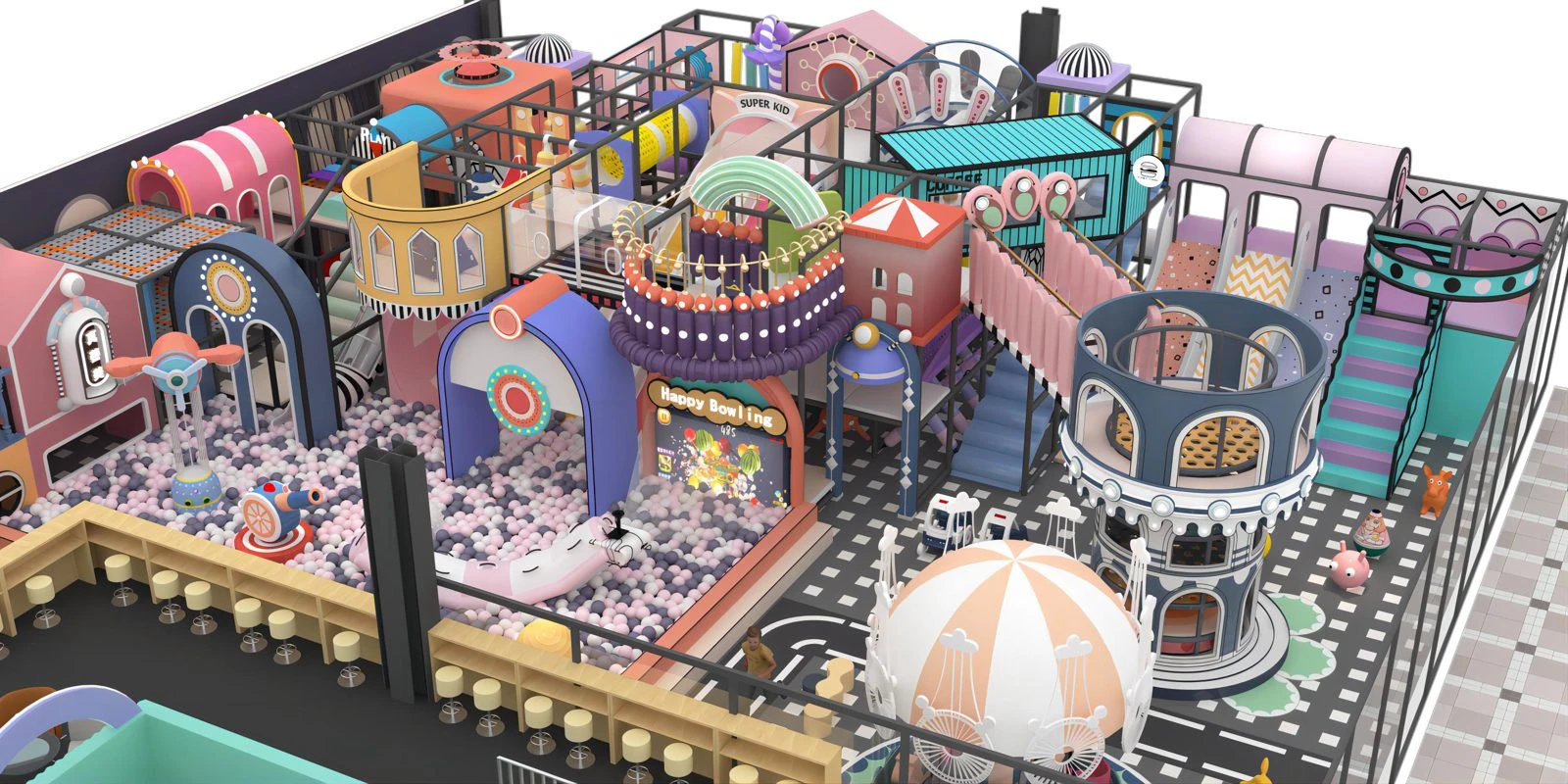
Record the venue context in the same profile, using the planning directions the supplier materials name rather than treating them as products. An adult adventure park organises movement, climbing and obstacle challenges around the intended adult participants and activity intensity. A competitive social venue pairs shared challenges for friends and groups with briefing, waiting and spectator spaces. Corporate team-building needs practical check-in, activity rotation, staff access and a clear supervision plan. A mixed-age FEC combines adult activities and family play in separately reviewed zones with clear boundaries and participant rules.
These are planning directions, not approved adult installations or packaged product sets. Specific products, adult suitability and the agreed supply package are confirmed through technical review before quotation, so the brief should carry the participation profile alongside the questions it raises.
Separate Each Attraction Type and Choose a Mix That Fits the Venue
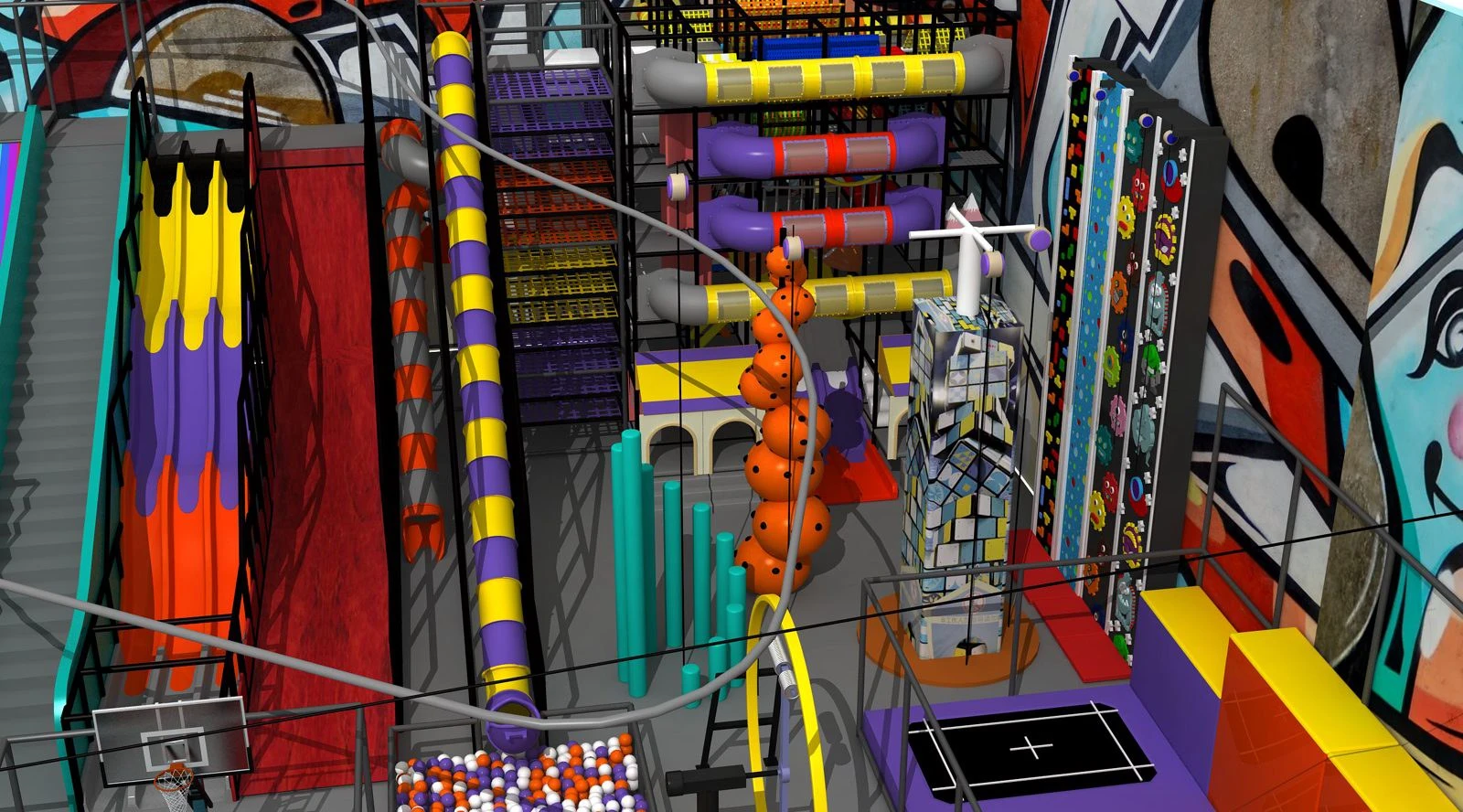
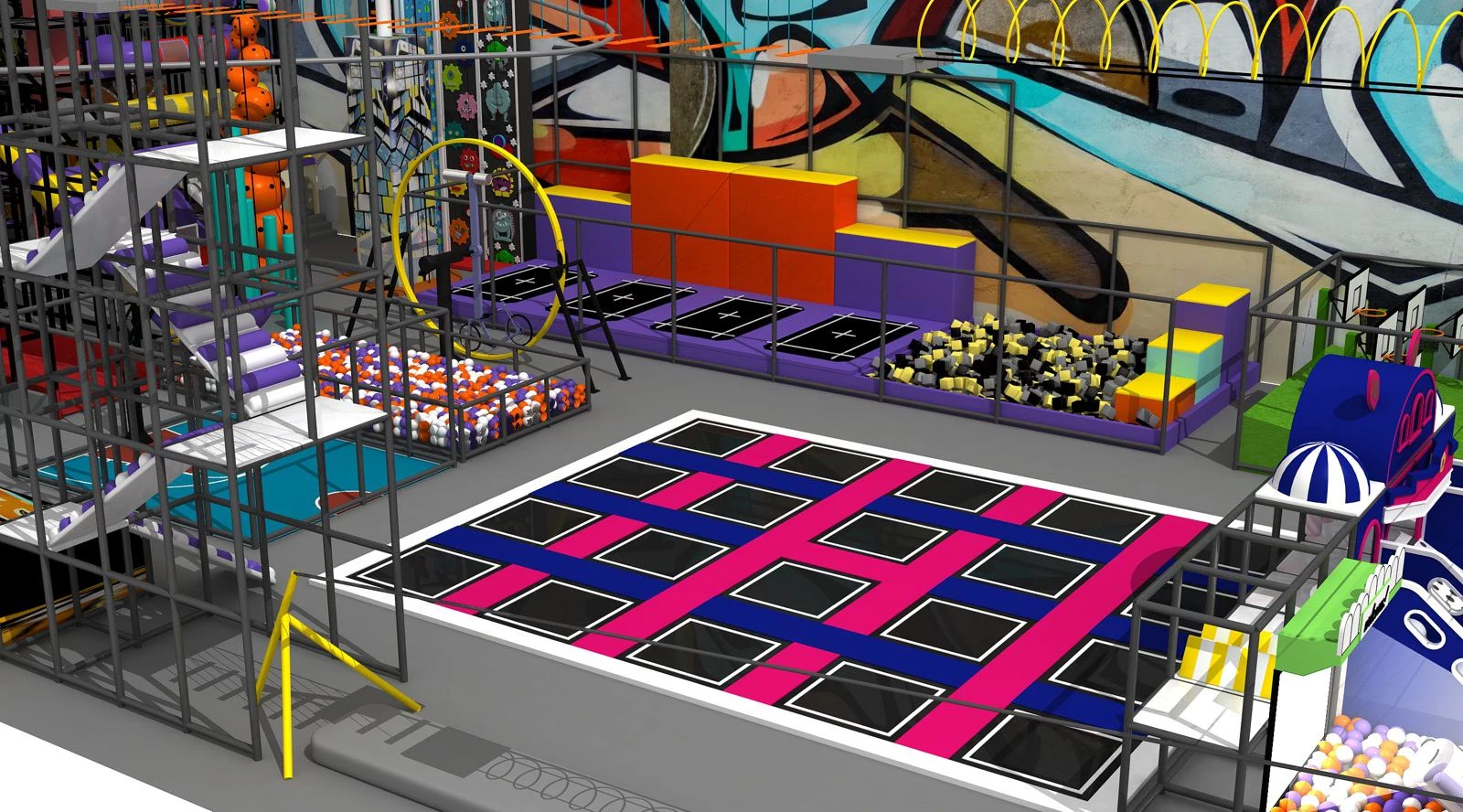
A shortlist written as one line — "adventure attractions" — cannot be quoted or compared. Break the concept into attraction families and review each family on its own. Larger obstacle systems, climbing activities, trampoline courts and group challenges are a set of possibilities selected for adult participation, not a package every venue needs.
For each family, answer the same brief field before it enters the mix. If the field cannot be answered from your participation profile, leave the attraction out of the request rather than carrying an open question into the quotation.
| Attraction family | What the visitor does | Brief field to confirm before including it |
|---|---|---|
| Ninja and obstacle courses | Works through modular physical challenges, timed courses and team obstacles | Participant loading, grip elements, fall zones and supervision for the selected system |
| Trampoline and jump zones | Uses free-jump courts and selected group activities | Approved participants, court geometry and landing interfaces |
| Climbing and rope adventures | Takes climbing challenges and elevated routes | Rope equipment supply, protection systems and adult suitability |
| Racing and thrill slides | Rides multi-lane and competitive slide concepts | Starting platform, descent profile, finish area and participant limits for each proposed model |
| Parkour and agility zones | Moves through balance elements and movement routes | Activity intensity, progression, landing surfaces and separation from through traffic |
| Interactive challenge games | Takes part in reaction and group-play concepts | Supplier availability, technical interfaces and intended users |
| Shared social and spectator space | Watches, waits, briefs and regroups around the active zones | Briefing, waiting and spectator space planned alongside the attractions |
A catalog reference does not establish adult suitability. Participant limits, structural configuration, activity envelopes and supervision requirements must be checked for each selected model before it is written into the brief.
Rope systems and interactive games also require confirmation of supplier scope and technical compatibility. Until that confirmation exists, keep those families in the shortlist as open items rather than as priced equipment lines.
Document Site Constraints Before Any Layout Is Priced
Site constraints are the part of the brief the supplier cannot invent for you. The layout, the equipment list and the itemized price are all drawn against measured building information, so every figure in the constraint record should come from the venue rather than from a lease document or a visual impression of the empty hall.
Record usable floor area, not the lease area. Partition walls, fixed plant, columns and required circulation all sit inside the leased footprint, and a layout priced against the headline area will not survive the first design review. Measure the area that equipment and activity zones can actually occupy, and mark on the plan where the usable boundary stops.
Measure height from finished floor to the lowest obstruction overhead, not from slab to slab. Beams, ducts, cable trays, sprinkler drops and suspended lighting all reduce the vertical envelope available to an attraction, and the lowest of them sets the ceiling for every activity placed in that position. Record the height beneath each obstruction and note where the ceiling steps down across the footprint.
The constraint record is project-specific. Your particular venue information is reviewed to identify how a layout could fit the documented space and which constraints carry into design, and specific products, adult suitability and the agreed supply package are confirmed through technical review before quotation. That review treats your measured record as the starting point, not a catalog footprint.
Note the same points around the plan, not only inside it. Mark column positions and sizes, the entrances and exits visitors and staff will use, the delivery and installation access route, and the building services that cross the proposed play area. These are the fixed obstructions that change equipment geometry, and leaving them off the drawing pushes the discovery into the quotation stage or onto site.
Separate the equipment interfaces from the building work in the same record. Equipment that mounts to a floor, connects to a power supply or passes near a fire system creates an interface the appointed building team needs to coordinate. Floor preparation, fire systems, lighting, HVAC and electrical work are building work carried out locally, not part of the equipment package, and the brief should say so explicitly.
Write the local responsibility boundary into the constraint record too. Local structural and building advisers are appointed by your side, and approval responsibilities and any specialist review fees sit with those parties. Recording the boundary next to the measurements keeps the later scope split anchored to a document both sides have seen.
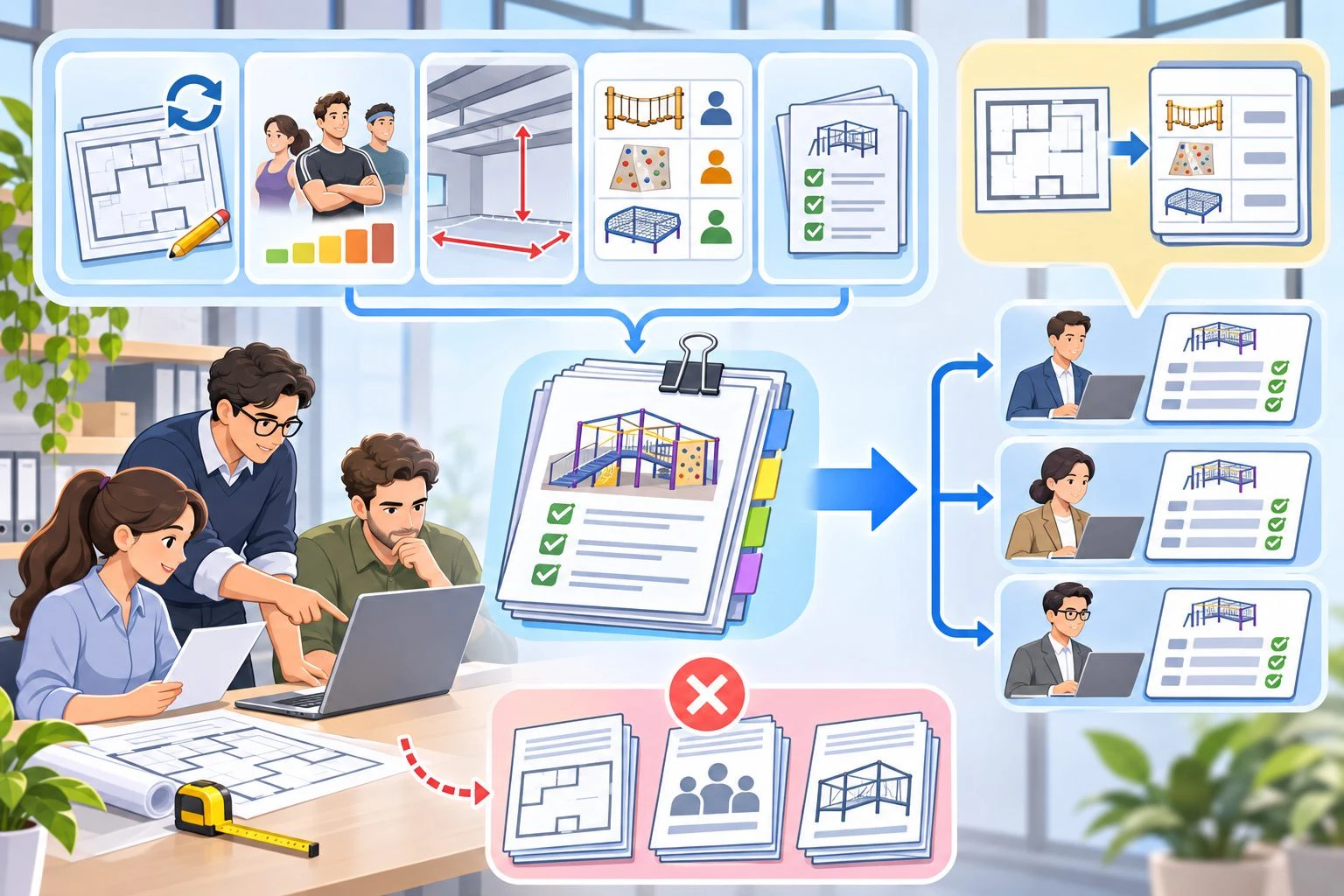
When the record is complete, attach it to the participation profile as one brief. The measured plan, the obstruction survey, the service information and the named local responsibilities are what a layout can be drawn against and what an itemized quotation can be tied to.
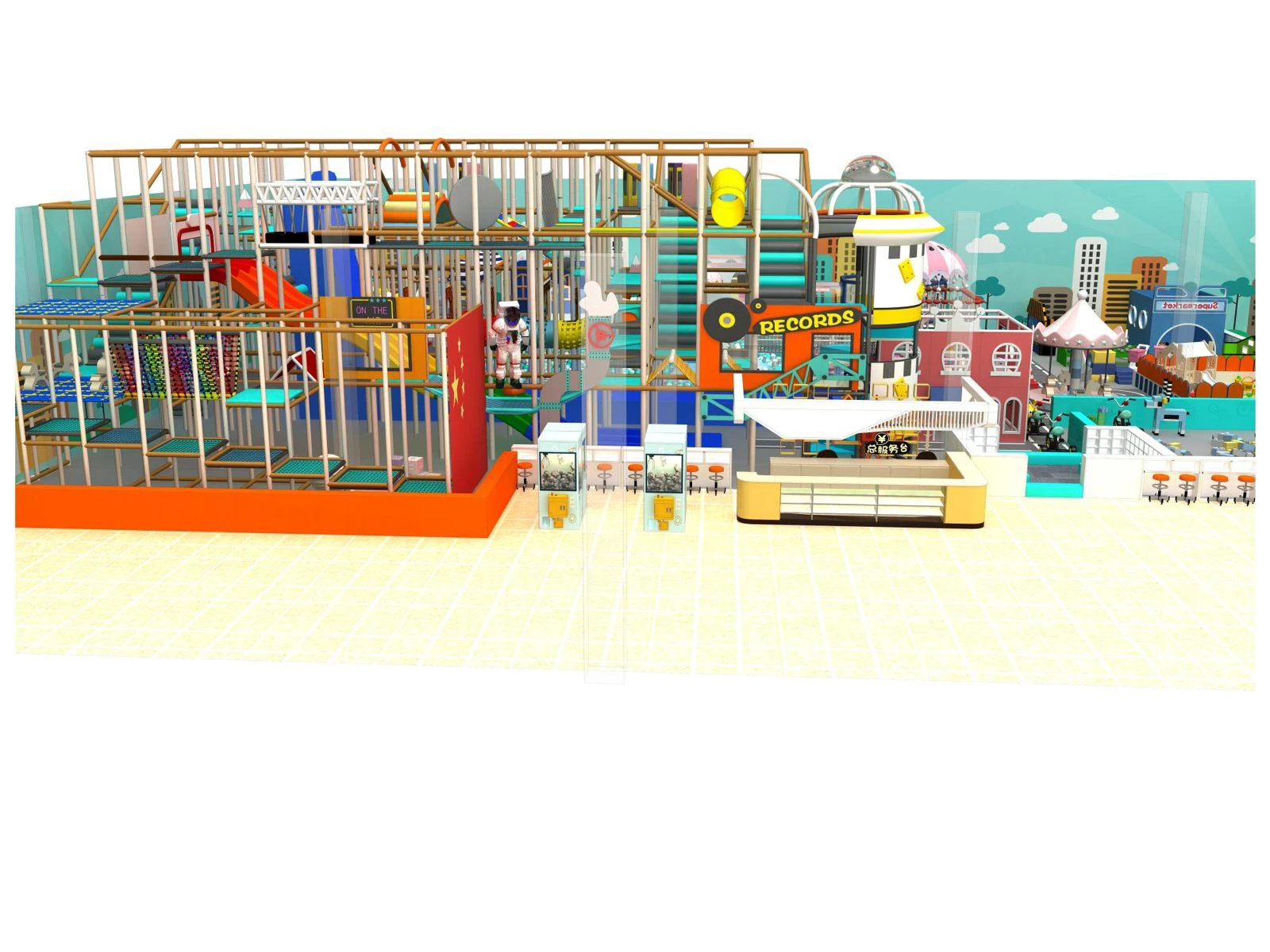
Split the Supply Scope So the Quotation Prices One Defined Package
Equipment pricing is itemized against the agreed layout and supply scope. That sentence only becomes useful once the supply scope is written down, because a total that rolls equipment, freight, installation and building work together hides the point at which the factory quotation stops and your own budget begins.
A useful estimate starts with the building survey, selected attractions, destination and installation plan rather than a price per square metre. When those four inputs are settled, each work package can be assigned to one side of the contract using the evaluation below.
| Work package | What the factory quotation covers | What the buyer's local team must budget or appoint | Who confirms the boundary in writing |
|---|---|---|---|
| Play equipment | Itemized attraction types, quantities, specifications and customization | Confirmation of the target users and operating brief, and a review of what is included before comparing quotations | Buyer reviews each listed item against the same attraction list used in the shortlist |
| Layout and engineering | 2D zoning, 3D design and equipment documentation within the agreed design scope | Appointment of local structural and building advisers, confirmation of approval responsibilities and any specialist review fees | Buyer names the appointed advisers; the design scope states where factory documentation ends |
| Shipping and installation | Packing, container requirements and the technical support specified in the quotation | Destination transport, import costs and local installation work according to the agreed delivery terms | Delivery terms and the technical support line are both read from the quotation text |
| Building fit-out | Identification of equipment interfaces that the appointed building team needs to coordinate | Floor preparation, fire systems, lighting, HVAC and electrical work budgeted with local contractors | Buyer's building team lists which interfaces it will coordinate before comparing offers |
| Operation and permits | Operation and care information agreed for the supplied equipment | Insurance, approvals, staffing, inspections and maintenance budgeted with the operator's appointed advisers | Operator's appointed advisers confirm who holds each approval, policy and inspection duty |
Read the second, third and fourth columns together before adding up any total. Transport and installation are not covered by default, so a figure that excludes them is a figure for a narrower package rather than a cheaper one. The same applies to operations: insurance, approvals, staffing, inspections and maintenance stay with the operator's appointed parties, and if they are absent from your comparison they are still costs you carry.
Two consequences follow for the brief. First, attach this split to the measured site record from the previous step, so the scope boundary and the constraints are reviewed together. Second, service schedules that involve local trades should be agreed as whole contracts rather than left unfinished. Turning the split into a signed work-package table, with one owner named per line, is what makes two returned quotations comparable.
Scope Safety Standards and Reports Attraction by Attraction
Identify the attraction type and destination requirements with the appointed reviewers. The applicable requirement follows the attraction, its intended use, the destination market and the local approval process, so it is settled with the people who will sign off the venue rather than assumed from the equipment family.
A trampoline-court certificate or children's playground report is not blanket certification for every adult attraction. Each document answers a question about a named product or sample, and a mixed adult venue places several different attractions under one roof.
Material test reports and general playground certificates do not establish that every adult attraction or whole venue is approved. Treat a report as evidence for what it names, not as a status the rest of the brief inherits.
For each attraction on the shortlist, request the report number, the tested model, the issuing body, the revision and the scope the document covers. Record those five fields against the same drawing revision as the equipment list, so a later layout change can be traced back to the documents that were reviewed.
Keep the document request and the approval question separate. Equipment conformity documents support a submission; they do not replace local project approval, which stays with the appointed reviewers and the destination authority.
What to Request in the Quote: 2D Zoning, 3D Design and Itemized Pricing
A finished brief becomes useful when it is turned into one request package. The aim is a quotation the buyer can trace back to a named layout revision, a defined supply scope and a documentation request that covers each selected attraction — not a generic offer assembled from a catalog.
- Name the floor plan or dimension sketch the layout is to be drawn against, and issue every later request against that same plan.
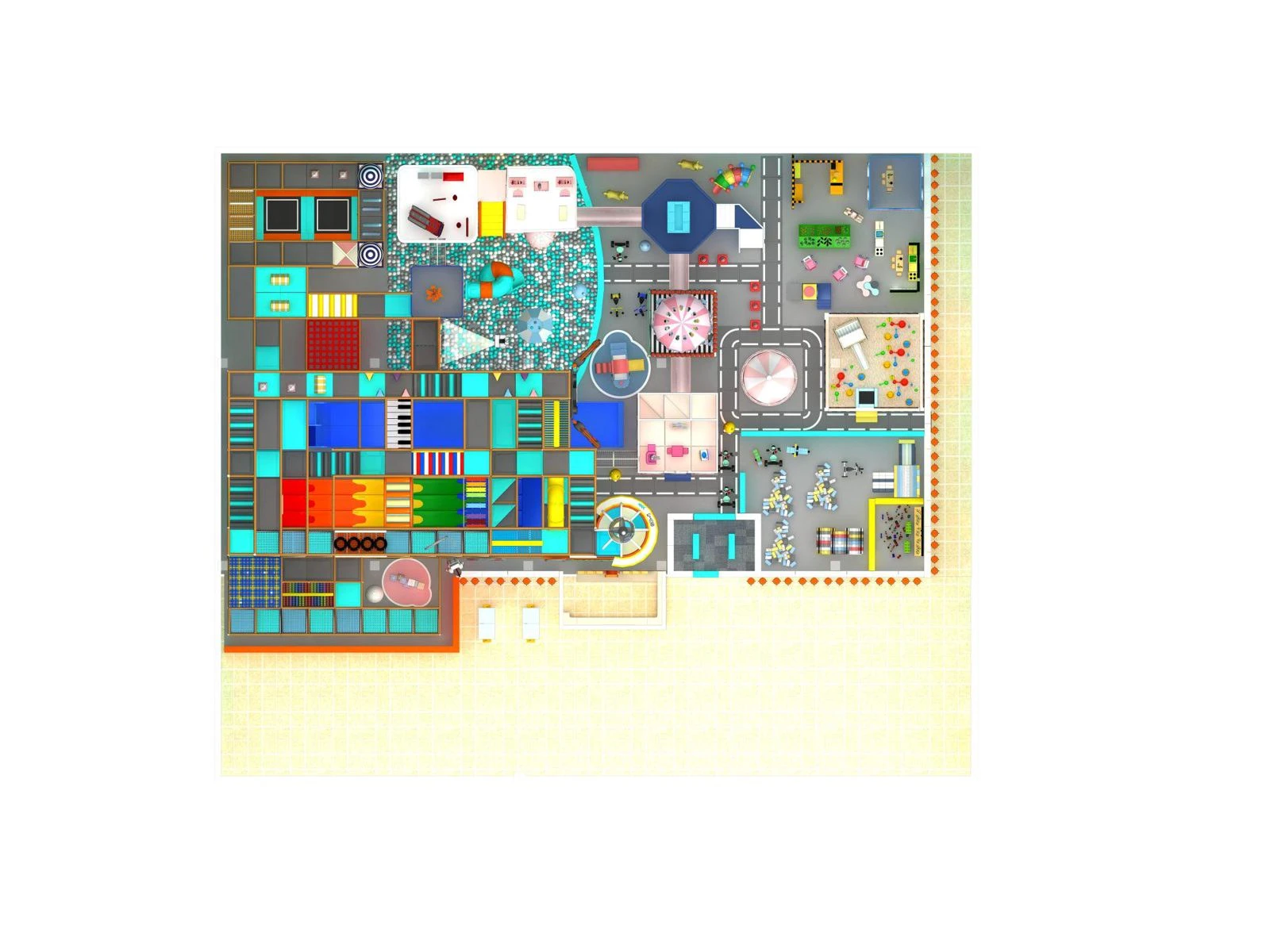
- Ask for custom layout design in 2D and 3D within the agreed design scope, so zones, columns, entrances and equipment positions are reviewed on paper before any price is discussed.
- Request direct factory equipment supply, with the supplied items listed individually rather than described as a single attraction package.
- Ask the supplier to separate attraction types, quantities, specifications and customization inside the equipment quotation.
- Require itemized pricing tied to the plan the layout was drawn against, so the price and the layout are tied to the same agreed layout and supply scope.
- Request project references that distinguish installed adult-suitable equipment, mixed-age FEC references and design concepts.
- Ask for project-specific drawings and, where available, corresponding installed photographs with confirmed equipment and intended users.
A general playground case is not evidence of approved adult use. When a reference is offered, read it for which of those three categories it belongs to before treating it as comparable to your venue.
Send the package as one file set: the layout the request is drawn against, the participation profile, the site constraint record, the supply-scope split and the documentation request. Equipment pricing is then itemized against the agreed layout and supply scope rather than against an assumption neither side has written down.
Frequently Asked Questions
Can we write the participation profile before we know the site dimensions?
Yes. Participation profile needs participant group and challenge intensity, not a measurement. Hold it as the reference you return to when a measured space later forces one attraction to change.
What makes an attraction shortlist detailed enough to send to a supplier?
Each named family must carry the field that will be checked for it: participant loading and supervision for an obstacle system, court geometry for jumping activities, participant limits for a slide. A family whose field is still blank stays on the open-questions list.
Which parties confirm the destination requirements for our attractions?
Identify the attraction type and destination requirements with the appointed reviewers. Until they have named the requirement, the documentation request has nothing to be matched against.
Can a supplier's general playground certificate be listed for every attraction in the brief?
No. List documentation against the attraction it names and its tested model, and keep the venue-level approval question with the appointed reviewers.
A supplier sent reference photos. What should we check before treating them as comparable?
Check whether the photo shows installed equipment intended for the same users, or whether it belongs to a general project intended for another user group. Ask for project-specific drawings and, where available, corresponding installed photographs with confirmed equipment and intended users.
Two quotations arrive with different totals. What do we compare first?
Compare the named drawing revision and the supply scope behind each figure before the totals. A total attached to an older layout or a narrower package is a different offer, not a cheaper version of the same one.

Next Step: Send One Brief, Not Three Assumptions
Assemble the brief as a single pack and send it in one go: the drawing revision the layout should be drawn against, the participation profile, the site constraint record, the supply-scope split with an owner named per line, and the documentation request for each selected attraction. Sent together, the pack gives every supplier the same starting point, so replies can be compared on what each one actually covers.
Equipment pricing is itemized against the agreed layout and supply scope, which means the pack is also what the quotation is later tied back to. Share the measured venue information you have and mark the rest as unknown rather than estimating it, because a layout priced against assumed dimensions will be revised once the measurements arrive. Site constraints come first in that exchange, and the scope follows from them.