
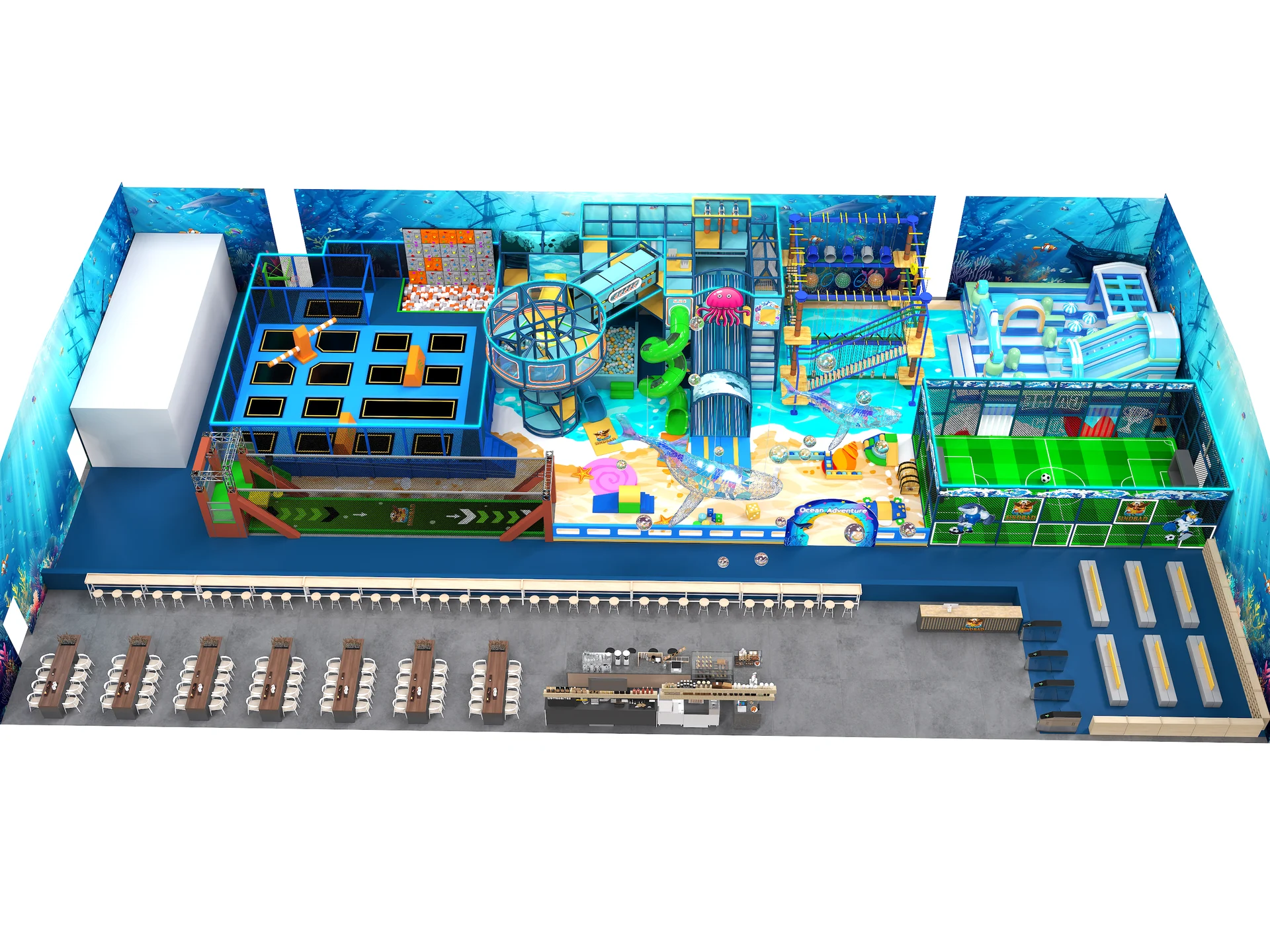
Start with the Venue and Its Customers
A family entertainment center budget starts with a specific site and operating plan. Record the location, measured floor area, clear height below beams and services, entrances, columns and intended age groups. Separate the area available for play equipment from circulation, reception, seating, party rooms and other uses.
Research the local customer catchment, competing venues, opening hours and proposed ticket offer. Record the source and date for each assumption. This guide provides a planning framework; it does not present a global market-growth forecast, a verified operating benchmark or a promised return.
Separate Equipment Cost from the Full Opening Budget
Ask each supplier to quote against the same drawings and equipment schedule. Record the currency, quotation date, included services, exclusions and delivery terms so that proposals can be compared on a consistent basis.
| Budget item | What to confirm |
|---|---|
| Play equipment | Selected activities, dimensions, materials, finishes, theming and the configuration covered by the quotation. |
| Delivery and installation | Packing, freight, insurance, unloading, installation labour, travel and supervision; identify who supplies each service. |
| Site preparation | Building works, electrical and mechanical services, flooring and other interfaces priced by the responsible local contractors. |
| Opening and operating funds | Lease deposits, staffing, training, launch costs, initial supplies and a reserve for the opening period. |
An equipment quotation covers only its stated scope. Confirm destination charges, taxes, inspections and any approvals with the parties responsible for them. Review the indoor playground contractor service for the delivery responsibilities to discuss with Dream Garden.
Build Revenue and Cash-Flow Scenarios
Estimate admissions from expected paid visits and the ticket prices actually charged after discounts. Model parties, memberships, food and beverage, and retail separately. Avoid counting an admission twice when it is already included in a party or membership package.
List the operating cash costs behind those sales: rent and service charges, payroll, utilities, cleaning, maintenance, insurance, payment fees, consumables, marketing and applicable taxes. State how financing, replacement equipment and changes in working capital are treated, and use the same basis when comparing scenarios.
Prepare lower-demand, expected-demand and higher-demand cases. Include seasonal differences, the opening ramp-up and potential interruptions. Keep a record of the evidence behind visitor numbers, prices, staffing and costs, rather than treating a supplier's equipment price as an operating forecast.
To assess payback, define the initial cash investment being recovered and track cumulative project cash flow against it. Revenue alone does not show whether that investment has been recovered. If the projected cash flow does not recover the investment within the period modelled, report that result instead of assigning a fixed payback date.
Choose an Activity Mix You Can Operate
Compare attractions against the intended ages, clear height, circulation, supervision, cleaning and maintenance arrangements. Include storage, parent seating and quieter areas in the planning discussion. Evaluate interactive or themed features against their operating needs and the experience you want to provide.
Review the certificate and test-report library for the selected equipment, checking each document's holder, model or sample and scope. Send your floor plan, destination, age groups and intended opening schedule through our contact page to request a project-specific equipment proposal.