1. Scope and standard edition: separate the checks
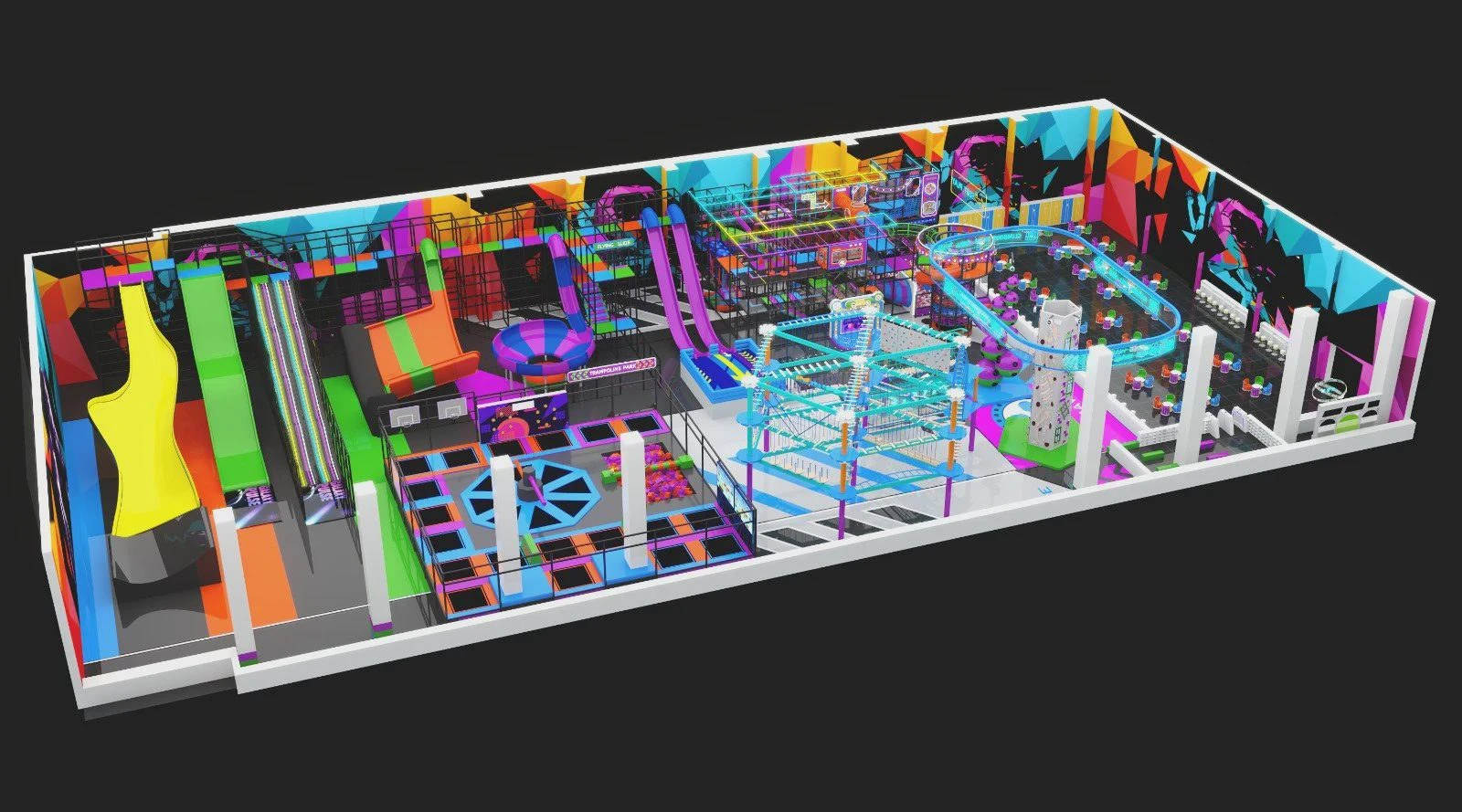
Trampoline courts and soft-contained play are different equipment families with different inspection logic. Operators navigating building inspections and insurance underwriting, architects verifying specification compliance, and international buyers auditing test certificates all need the same discipline. The equipment scope, required standard edition and local review process must be confirmed before ordering, and soft-contained play equipment and trampoline courts need separate scope checks.
In practice, that means your RFQ should list each zone as a line item — trampoline courts, padded landing areas, basketball lanes, dodgeball courts, access and egress points — rather than one blended "park" figure. Ask suppliers to state which standard edition their documentation addresses and how they expect your local reviewer to treat it. If a supplier answers with a general certificate claim instead of a scope-specific statement, treat that as an open item, not a pass.
Two boundaries are worth setting early. First, certification claims describe the manufacturer's documentation, not your site's compliance; the local review process still governs. Second, a wider scope usually means more interfaces between suppliers, so confirm who owns frame fixing, padding continuity and edge transitions where zones meet.
For a structured walkthrough of how scope documents are assembled, see Dream Garden's project planning and buying guides.
2. Court, landing and circulation: fit the measured venue
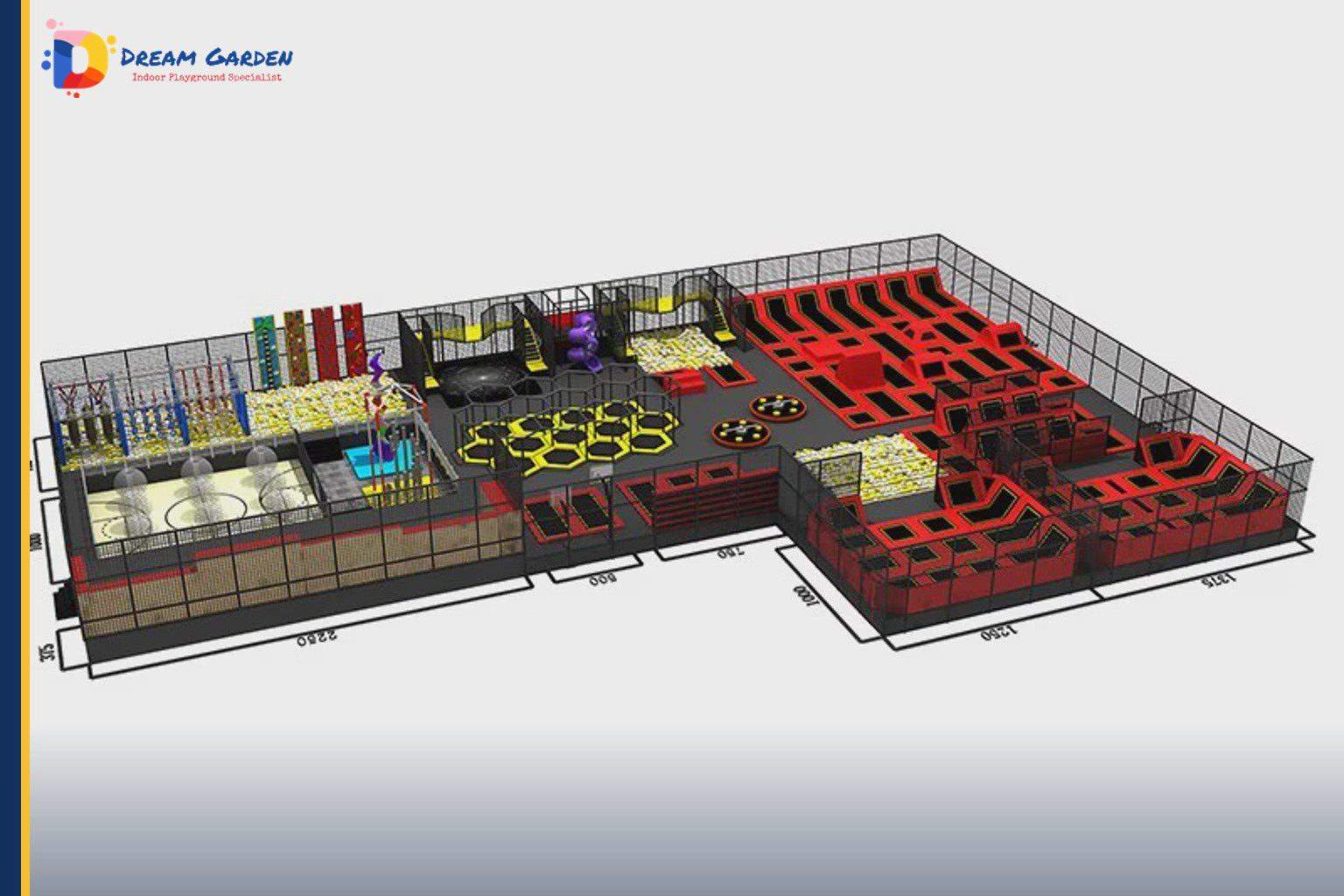
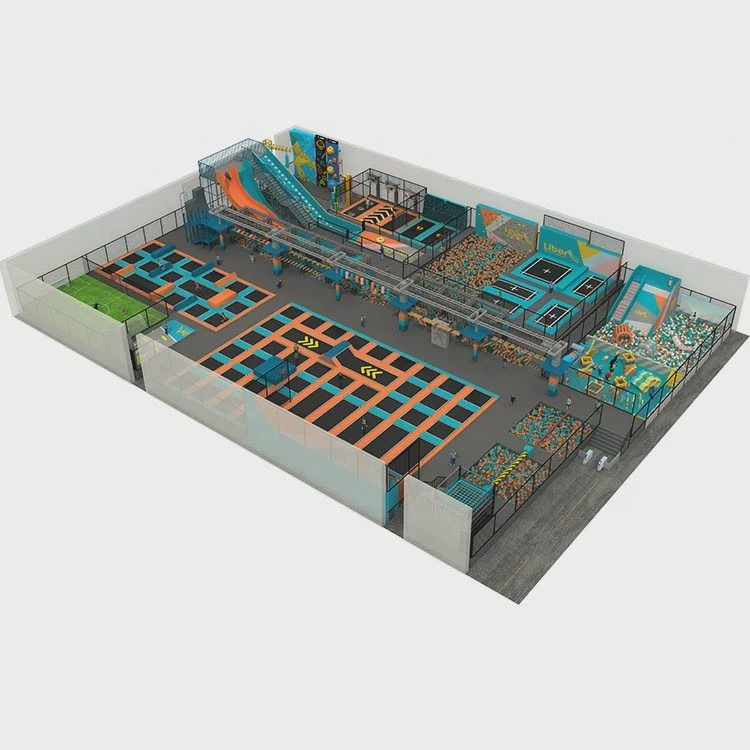
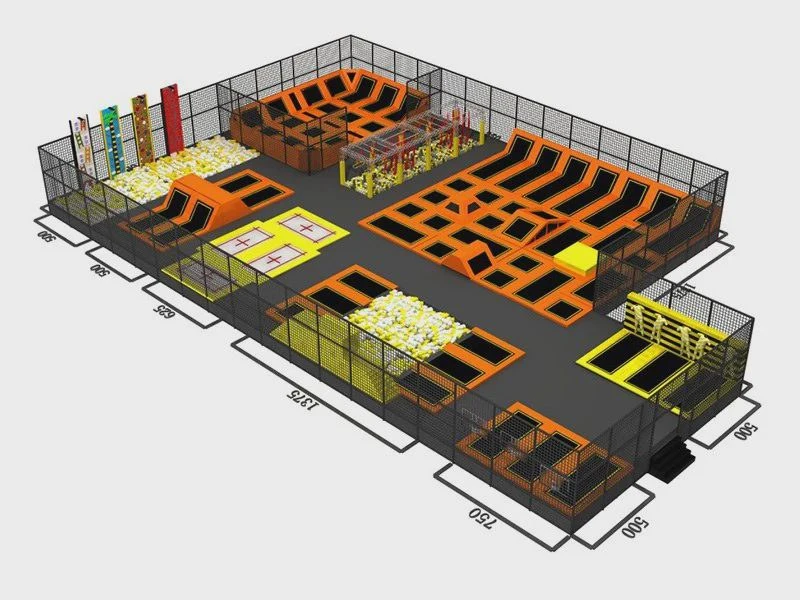
Layout allowances drive cost more than any single component. Allow for installation, activity zones and circulation, with final requirements following the approved layout. That single rule resolves most early disputes: the approved layout, not the sales drawing, is the reference document.
Buyers should verify three dimensions before signing:
- Court footprint: the netted jumping area plus the frame and padding envelope, measured against columns, walls and ceiling height.
- Landing zones: padded landing areas at court edges and between activity zones, wide enough that a rebound does not push a jumper into a frame or walkway.
- Circulation: spectator sightlines, queue space, entry and exit routes, and staff access to every court without crossing active jumping zones.
Customization should adapt the footprint, deck heights, columns and entrances to the measured venue. A supplier who offers only standard footprints is not necessarily a poor fit — but you must then confirm the standard module actually clears your columns and ceiling. Conversely, heavy customization raises drawing-approval time and the risk of site-fit errors, so budget review cycles for it.
Use the trampoline park equipment collection to shortlist court and landing-zone options before requesting a layout based on your measured floor plan.
If your venue combines trampolines with other attractions, compare layout logic across equipment families in the commercial indoor playground equipment range before fixing the floor plan.
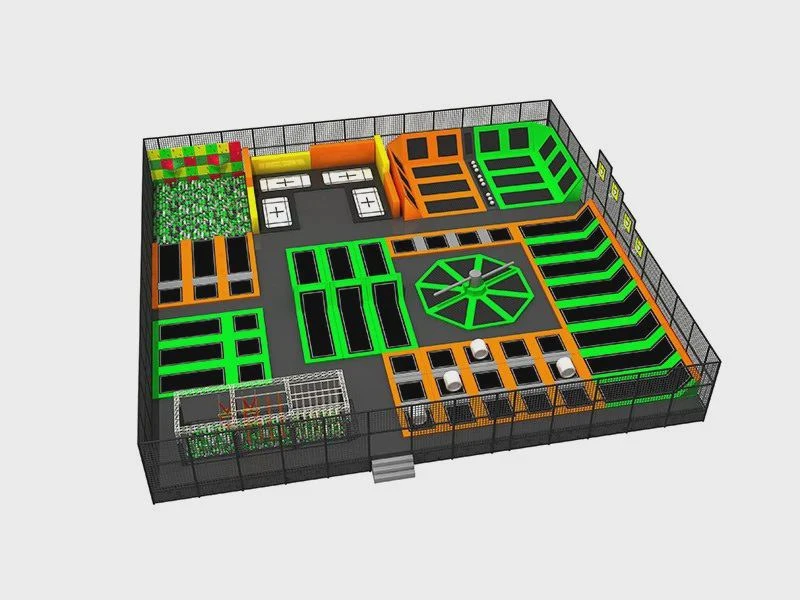
3. Activity mix: basketball, dodgeball and supervision load
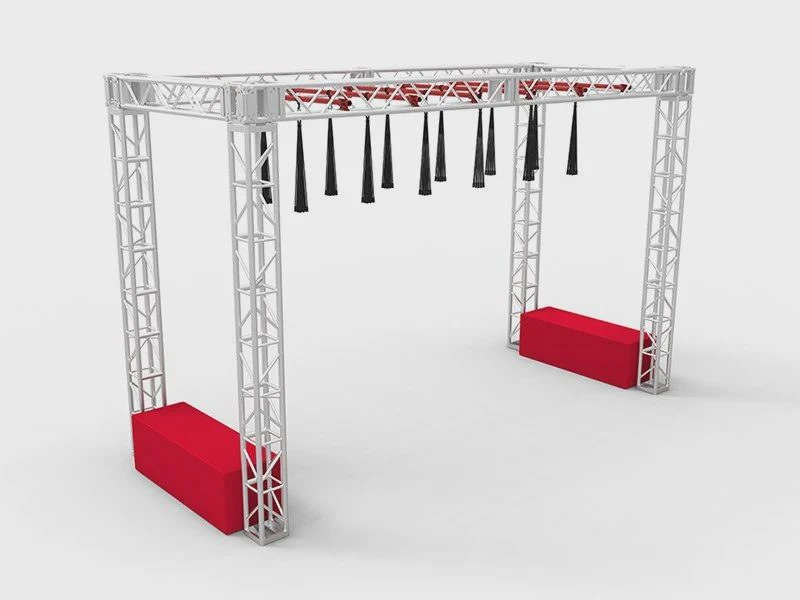
Activity mix is an operating decision as much as a design one. Basketball lanes and dodgeball courts add revenue potential, but each adds a supervision point, a queuing pattern and a wear surface. Different parks have unique needs and themes, and a good manufacturer should offer customization options to tailor the equipment to your specific requirements.
Set the mix against three constraints:
- Audience and age bands: dodgeball suits group play; younger visitors need separated zones and sightline control.
- Supervision capacity: every additional activity zone needs a staffed vantage point. If you cannot staff it, the zone becomes a risk, not an asset.
- Shared services: changing, seating, storage and first aid should serve all zones without forcing visitors through active courts.
Customization also covers palettes, graphics and branding. These are low-risk changes compared with structural ones, so settle branding late and structural fit early. Multi-activity venues can benchmark zone planning against indoor adventure park equipment layouts that share circulation and supervision logic.
4. Manufacturer vetting: quality control, delivery and traceability
Look for manufacturers who comply with international safety certifications and have a solid track record of delivering high-quality products. A reliable manufacturer should also guarantee quality control and delivery times so the equipment arrives without delays or problems. Those two commitments — documented quality control and a delivery schedule — belong in the contract, not the brochure.
Use a short verification checklist:
- Test certificates matched to the specific equipment scope, not a generic company certificate.
- Named inspection points during production and a pre-shipment review you can attend or delegate.
- A written delivery schedule with milestones and stated consequences for slippage.
- Spare parts list and wear-item identification for mats, springs and padding.
The supplier shortlist itself is a research task. Industry listings, such as the operator and manufacturer names collected in this indoor trampoline park business overview, help you build a comparison set before narrowing it. For the vetting criteria in more depth, read these benefits of a professional trampoline park manufacturer.
5. Comparison table and selection triggers
Use the table below to compare shortlisted suppliers on the same dimensions. Scores are qualitative; the point is to force evidence for each cell.
| Evaluation dimension | What to request | Choose this option when |
|---|---|---|
| Standard scope and certification | Scope-specific test documentation and stated standard edition | Your insurer or local reviewer requires named documentation per zone |
| Layout fit and customization | Approved layout drawings adapted to measured columns, heights and entrances | Your venue has irregular columns, low ceilings or mixed attractions |
| Activity mix and supervision | Zone plan with staffed vantage points and queue routes | You plan basketball, dodgeball or group programming and can staff it |
| Quality control and delivery | Inspection milestones, delivery schedule, spare parts list | You have a fixed opening date or phased installation |
Illustrative trigger, not a real case: a mid-size operator with a fixed opening date should weight delivery scheduling and pre-shipment inspection above extra activity zones. A larger venue with in-house maintenance may accept more customization in exchange for longer drawing cycles. Neither choice is universally better; each trades flexibility against schedule and supervision risk.
FAQ
Do trampoline courts and soft play need separate scope checks?
Yes. They are different equipment families, and the source guidance states they need separate scope checks. Confirm each zone's documentation independently.
Can we order from a standard catalogue layout?
Only if the standard module clears your measured columns, ceiling height and circulation routes. Otherwise request an adapted layout against the approved plan.
What should the RFQ include?
Measured venue, zone-by-zone equipment list, required standard edition, local review process, activity mix, supervision plan, delivery milestones and spare parts list. Review the custom trampoline park equipment page when drafting the line items for your supplier to confirm.
How much customization is reasonable?
Customize structural fit early and branding late. Every structural change adds drawing review time and site-fit risk, so keep it tied to measured constraints.
Conclusion
Selection comes down to scope discipline. Fix the measured layout, split trampoline and soft-play checks, size landings and circulation for real supervision, and hold suppliers to documented quality control and delivery commitments. Compare options on the same dimensions and record the evidence behind each cell. For further procurement reading, see the playground guides and news hub.