1. Site constraints and fall zones come before equipment selection
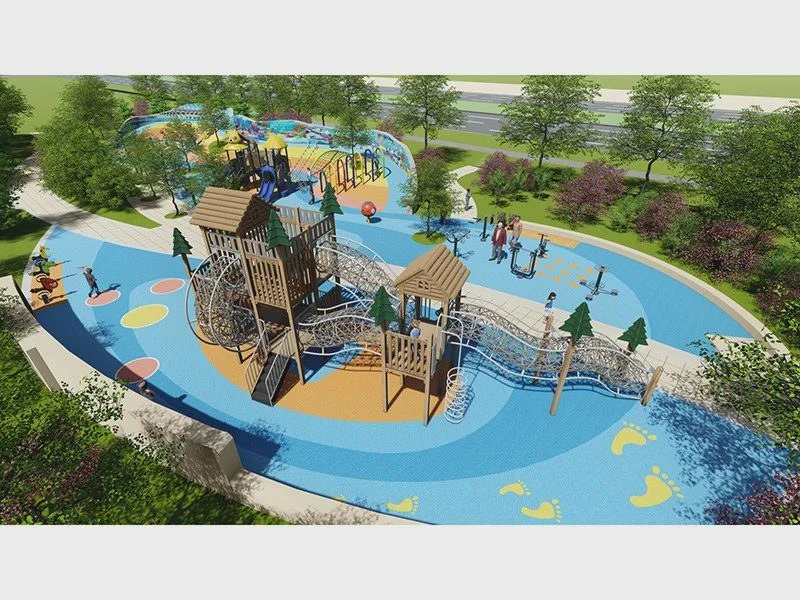
Site review is the first procurement gate. A layout that looks efficient on a catalogue page may fail once fall areas, circulation and supervision sightlines are mapped onto your plot. Supplier guidance for a new site notes that the layout "would need site-specific review of fall areas, supervision sightlines, circulation and local safety requirements." That is a qualification, not a marketing claim. Treat it as a hard checkpoint.
The same source is explicit about what a reference project cannot tell you. It states that "the catalogue does not specify installed capacity, clear ceiling height or operating results." For outdoor projects, read that as a warning. Do not infer throughput, visitor capacity or revenue from pictures. Those figures must come from your own feasibility model and be confirmed against your drawings.
Materials and ground conditions belong in the same review. Supplier guidance states that "materials, finishes, surfacing and foundation requirements are reviewed against local climate and ground conditions to support practical installation and ongoing use." In practice, your RFQ should state climate exposure, soil or slab conditions, drainage and expected footfall. That lets the supplier respond with a specific proposal rather than a generic one.
Practical checks for this stage:
- Mark fall zones and access routes on a scaled site plan, not a sketch.
- Confirm who is responsible for surfacing depth and foundation design.
- Check local safety requirements early; retrofitting compliance is expensive.
- Walk supervision sightlines from where staff will actually stand.
For an overview of the equipment families available, see the commercial outdoor playground equipment range.
2. Equipment scope, modules and materials: fix the bill of materials
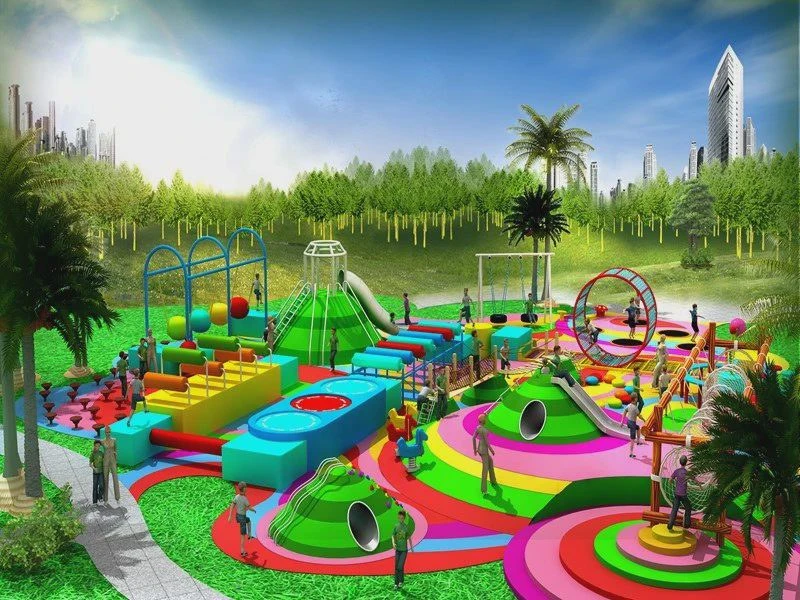
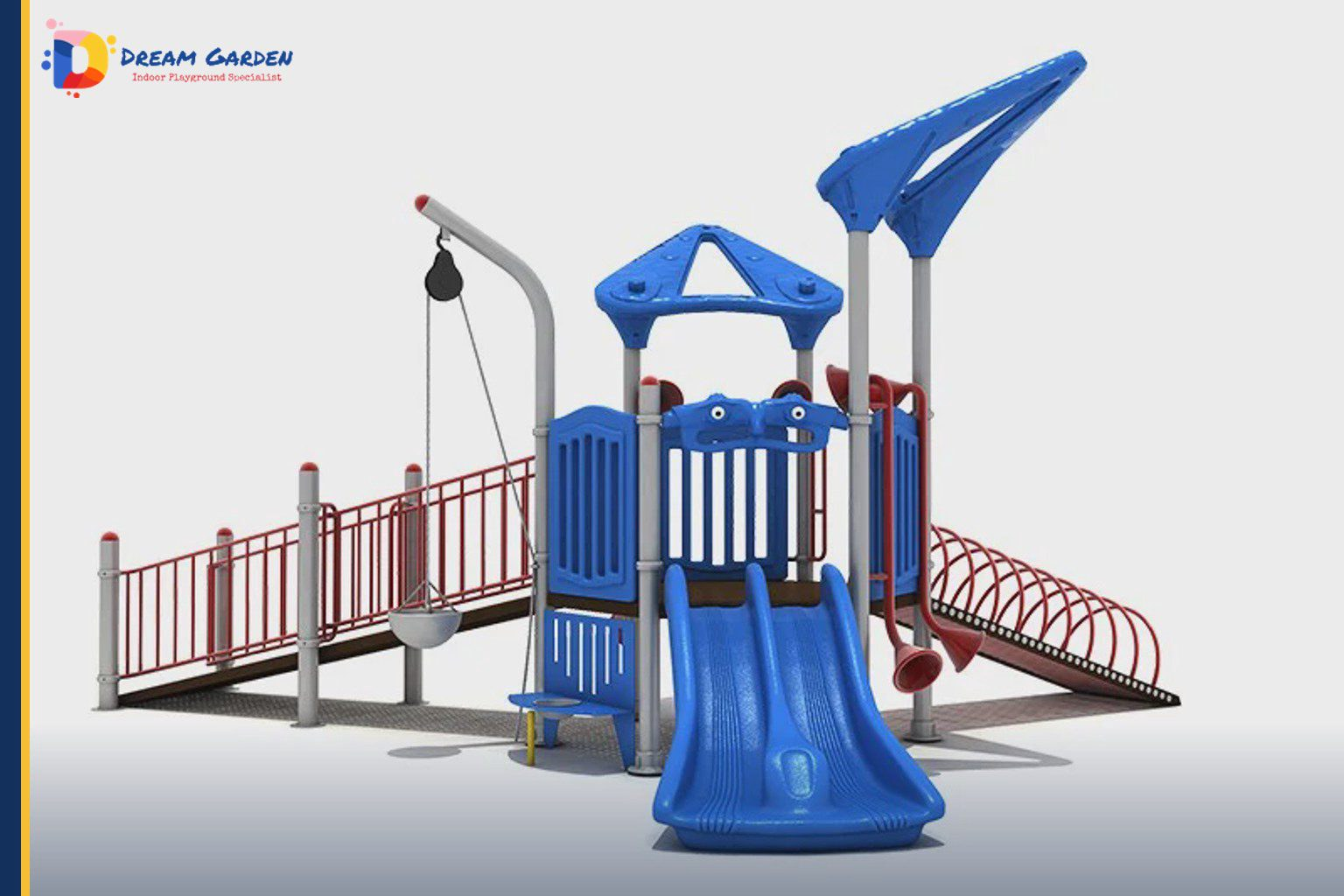
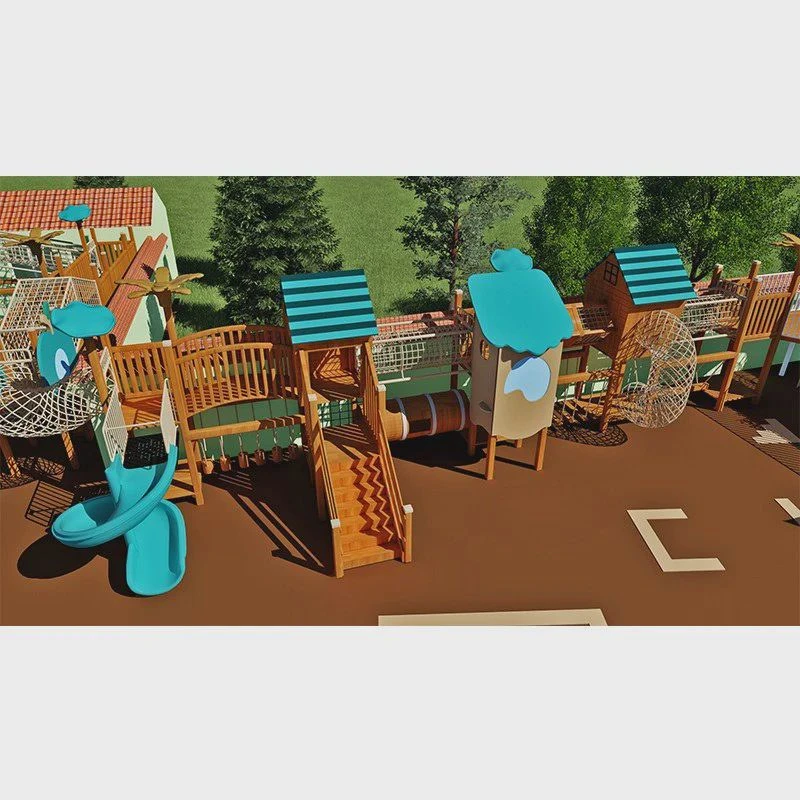
Once the site is fixed, write the equipment scope as a bill of materials. List each module, its dimensions, materials, finishes and fixings. Themed outdoor range guidance tells buyers to "review the pictured design and confirm the layout, materials and project requirements before ordering." That is the correct order of operations. A picture starts a brief; it does not specify one.
Ask suppliers to separate the scope into four layers. These are play modules, structural framing, surfacing and foundations, and installation consumables. Ambiguity usually sits in the last two, which is where budget overruns appear. A themed design with custom panels also carries longer lead times and higher tooling or finishing costs than a standard modular range. Decide early whether the theme is essential to your positioning or merely decorative.
Quality documentation should track the same scope. One supplier describes "a connected process from design to delivery" in which "each checkpoint keeps the confirmed equipment scope, drawings and inspection records aligned." That process begins with a design review to "confirm the users, layout, equipment and project requirements." For a buyer, this becomes a simple test. Can the supplier show reviewed drawings and material checks that match the exact configuration in your quote?
Useful RFQ items at this stage:
- Module schedule with dimensions and target age or user groups.
- Material specification per component, including finishes and fixings.
- Surfacing type, depth and test assumptions.
- Drawing set to be issued for approval before production.
- Spare parts list and recommended wear-part stock.
Browse the commercial playground equipment catalog to build a shortlist. Use custom playground planning and turnkey solutions when the site demands a non-standard layout.
3. Comparing procurement paths: modular, themed turnkey and custom
Most commercial buyers choose between three paths rather than three brands. The table below compares them on dimensions that matter to evaluation committees. It is a decision aid, not a ranking. The right path depends on site complexity, team capacity and how much design risk you can absorb.
| Evaluation dimension | Standard modular range | Themed turnkey build | Fully custom layout |
|---|---|---|---|
| Design effort and lead time | Low; catalogue configuration | Medium; theme adaptation and finishing | High; site-specific drawings and review cycles |
| Site fit and fall-zone control | Good on regular plots | Depends on theme footprint | Best where constraints are unusual |
| Documentation burden | Standard drawing set | Drawing set plus finish and theme approvals | Full drawing, material and inspection record trail |
| Operating and maintenance risk | Predictable; standard spares | More wear surfaces and custom parts | Requires a maintenance plan agreed at handover |
| Best fit by team capacity | Small operator teams, first-time buyers | Operators with a clear brand concept | Large sites or committees with technical review capacity |
Explicit triggers help. Choose a standard modular range when your plot is regular, your team is small and speed matters. Choose a themed turnkey build when differentiation drives visitor appeal and you can absorb longer approval cycles. Choose a fully custom layout when fall zones, sightlines or irregular ground make catalogue layouts unworkable. Only take that path if you have the technical capacity to review drawings properly.
Installed references help compare the "visual and operational demands" of a configuration. They remain references, not guarantees. Review commercial playground projects and case studies with that limitation in mind, and ask what was site-specific in each one.
4. Supplier documentation, budget and operating checks
Supplier evaluation should be a documentation exercise, not a trust exercise. Ask for the quality process in writing. Check that it names the checkpoints you care about: design review, material checks, in-process inspection and pre-shipment records. One supplier frames this as "product-specific evidence, project-specific requirements, clear documentation." That is a reasonable standard to hold any supplier to.
For procurement teams, the practical test is traceability. Can the supplier link each inspection record to the confirmed equipment scope and approved drawings? If the answer is vague, the risk sits with you at installation and handover. Committees should also confirm three things. Who signs off drawings? What happens when a material substitution is proposed? How are non-conformities recorded and closed?
Background on a manufacturer's process and history is worth reviewing before shortlisting. See about Dream Garden for company context. Treat such pages as orientation, and verify certifications and test reports directly rather than relying on summaries.
Budget comparisons fail when they compare equipment prices only. Compare total installed cost: equipment, surfacing, foundations, installation, freight, customs, commissioning and first-year maintenance. Buyer guidance groups the early work around space planning, budget basics and equipment selection, which matches the sequence above. No supplier page should be read as confirming installed capacity or operating results. Those remain your own modelling inputs.
Operating requirements deserve equal weight. Confirm supervision sightlines, circulation widths, maintenance access and the wear parts you will stock. A design that is efficient to install but awkward to inspect will cost more over its service life.
Inclusive provision is increasingly part of the brief. If your project must serve a wider range of users, review commercial inclusive playground equipment alongside the standard range. Confirm which elements are genuinely accessible rather than symbolic. Where a project combines indoor and outdoor activity, the commercial indoor playground equipment range can help you compare how activity types are grouped or separated. Any hybrid layout still needs site-specific review.

FAQ
Should we buy commercial outdoor playground equipment from China?
It can be a sound option, but the decision should rest on documentation and fit, not price alone. Supplier guidance frames the question as something to research "before you decide." Compare suppliers on drawings, material checks, inspection records and installation responsibility.
Can we rely on catalogue photos to choose a design?
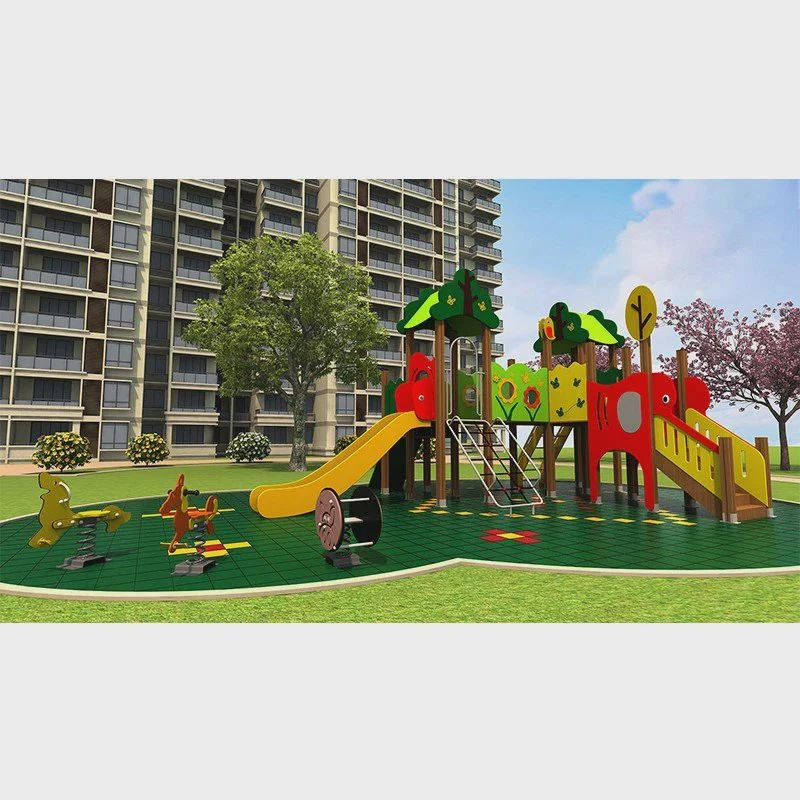
No. Photos show intent, not specification. Confirm layout, materials and project requirements before ordering, and require approved drawings before production.
What can a reference project tell us?
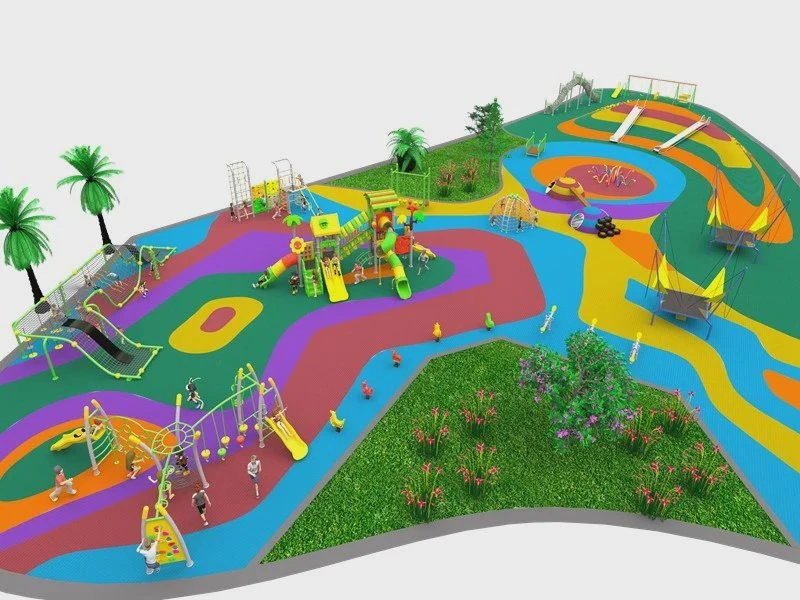
It can show visual and operational demands and how activities are grouped. It does not confirm installed capacity, ceiling height or operating results. Do not use it as a feasibility substitute.
Who should own surfacing and foundation design?
Assign it explicitly in the contract. Materials, finishes, surfacing and foundations should be reviewed against local climate and ground conditions. Someone must be accountable for that review.
How do we compare quotes fairly?
Normalise them to the same scope: module schedule, surfacing, foundations, installation, freight, commissioning, spares and documentation. Quotes that omit these layers are not comparable.
Conclusion
Before ordering commercial outdoor playground equipment, confirm the site, fix the bill of materials, choose a procurement path deliberately, and demand documentation that ties inspection records to your approved drawings. The supplier question matters less than the specification discipline you apply to every supplier. Start with a scaled site plan and a written scope; the right equipment choice usually follows.