


Why loose bend callouts turn into installation drift
Installation drift is the gap between what the drawing promised and what the assembled structure allows. It rarely comes from one bad part. It comes from accumulated error: several bends, each a little off, feeding into bolted connections that were designed with little adjustment margin.
Consider a hypothetical slide support frame with four bent legs and a cross-brace. If each leg's bend angle is allowed to vary freely and the hole positions are tied to those bends, the brace holes can misalign even when every individual part passes a casual visual check. On site, the crew either forces the joint, drills out the hole, or shims the frame — all of which change load paths and finish quality.
This is why the BOM should treat bend tolerances as assembly tolerances. A practical checkpoint: calculate the worst-case stack-up across the joint that has the least adjustment. If the combined tolerance exceeds the slot or clearance available, the specification needs tightening or the joint needs a slotted hole. Either decision belongs in the drawing review, not in the installation phase.
The same logic applies to orientation. Dream Garden's installation guidance notes that drawings should carry exact measurements for spacing and placement and orientation details for components that are not symmetrical. Bends define orientation on asymmetric parts, so an ambiguous bend callout is effectively an ambiguous installation instruction.

The tolerance and material fields to audit line by line
Use the table below as a review grid. Each row is a field that should be present, a reason it matters, and a concrete acceptance question to put to the supplier.
| BOM field | Why it matters | Acceptance question |
|---|---|---|
| Material grade and thickness | Strength, springback and bendability all depend on it | Which grade and gauge, and does the certificate match the BOM line? |
| Inside bend radius | Too tight a radius risks cracking or thinning on the outside of the bend | Is the radius stated as a number, and is it achievable in this grade? |
| Bend angle tolerance | Drives joint alignment and frame squareness | What is the ± value per bend, and how is it measured? |
| Bend location tolerance | Controls hole-to-bend distance and bolt fit-up | Which datum is used, and what is the allowed deviation? |
| Hole position relative to bend | Small shifts here cause on-site rework | Are holes dimensioned from the bend or from a stable datum? |
| Inspection method and records | Makes the tolerance verifiable rather than aspirational | What report accompanies the shipment, and what is sampled? |
Two fields deserve extra attention. First, inside bend radius: springback varies with grade and thickness, so a radius that works in one material may not transfer to another. Second, hole-to-bend distance: if holes are dimensioned from the bend line, any angle error moves them. Dimensioning from a fixed datum is usually more robust for modular frames.
Material callouts should also connect to incoming inspection. Dream Garden's quality documentation describes a step to check incoming materials and components against the agreed specification, with material records retained. Ask your supplier to show that the bend sheet's grade and thickness feed directly into that check, so a substitution is caught before bending rather than after assembly.

How to cross-check a supplier's bending capability against their drawings
Do not accept a capability claim on its own. Test it against the documents the supplier actually produces. A short, structured review works better than a long questionnaire:
- Ask for a sample tolerance sheet from a comparable project and check that every field in the table above is populated, not left as a general note.
- Request a first-article inspection report for one bent frame part and confirm the measured values map to the BOM tolerances.
- Ask how springback is compensated — whether by CNC control, trial bends, or a fixture — and whether that method is recorded.
- Confirm the inspection tool used for angle and location, and whether it is calibrated.
- Check the handover package: which records travel with the shipment and who signs them off.
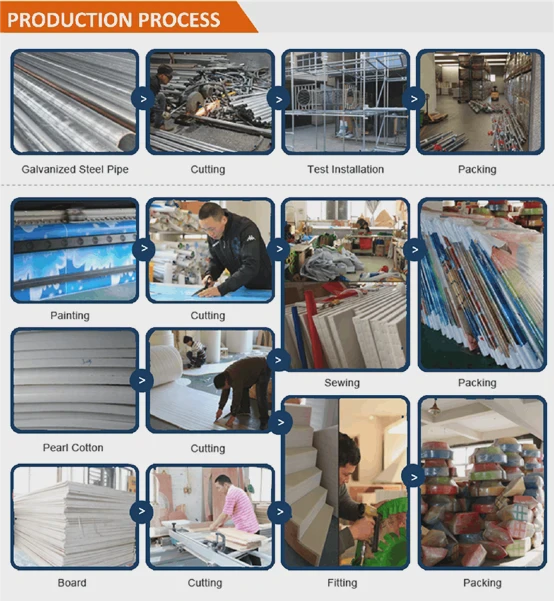
A supplier using precision CNC bending should be able to explain its process control in plain terms. Dream Garden describes combining creativity, protection and production precision, and its quality documentation sets out a sequence from production control through inspection and testing to packing and dispatch review, with process checkpoints and inspection evidence at each stage. That sequence is the right frame for your audit: the bend tolerance sheet is only credible if it plugs into a documented inspection step.
One practical warning sign: drawings that specify tolerances the supplier's own inspection report never measures. If the report covers length and hole position but not bend angle, the angle tolerance is decorative. Ask for it to be added or removed from the BOM so the document set stays honest.
Decision checkpoints before you release the PO
Treat the following as go/no-go gates rather than preferences. Each one should be resolvable with a document, not a conversation.
- Stack-up check passed: worst-case bend and hole tolerances fit within the joint clearance or slot allowance.
- Every bent line populated: grade, thickness, radius, angle tolerance, location tolerance and inspection method are present.
- Datum logic confirmed: holes are dimensioned from stable datums where modular assembly depends on alignment.
- Records agreed: the inspection report format and sampling level are fixed before production starts.
- Installation documents aligned: spacing, placement and orientation details on the installation drawings match the fabrication drawings.
If a supplier cannot meet a tolerance, the honest options are to widen the joint allowance, add a slotted hole, or change the process. Approving a tight callout that no one measures simply moves the risk to the installation crew. Buyers who want a broader view of how fabrication and installation documentation fit together can review Dream Garden's playground planning, manufacturing and installation support and the installation and project support guides for the handover side of the same workflow.

FAQ
What bend angle tolerance is typical for playground frames?
There is no universal figure, and you should be wary of any supplier who quotes one without asking about your joint design. What matters is the stack-up: the combined tolerance across a bolted joint must fit the available clearance. Ask the supplier to state a value per bend and show how it was verified on a comparable part.
Should bend tolerances be on the BOM or on a separate drawing note?
Put them on the BOM line where possible, because that is the document procurement and incoming inspection actually use. A general drawing note is easy to overlook and hard to audit. If a note is unavoidable, reference it explicitly from each bent part line.
How do I check material grade without destructive testing?
Start with the mill certificate or material record and match it to the BOM line. Dream Garden's documented process includes checking incoming materials against the agreed specification and retaining material records, which gives you a paper trail. For high-risk parts, agree a sampling plan for verification before production.
Does CNC bending remove the need for tolerances?
No. CNC control improves repeatability, but springback, material variation and tooling still produce deviation. The tolerance sheet defines what deviation is acceptable and how it will be measured. Precision bending makes a tight tolerance more credible; it does not make the callout unnecessary.
What if the supplier's drawings and installation drawings disagree?
Stop and reconcile them before the PO. Bend orientation on asymmetric parts directly affects how components face during assembly. Dream Garden's installation guidance stresses exact spacing, placement and orientation details, so a mismatch between fabrication and installation documents is a real risk, not a clerical one.
Conclusion
Approving a playground BOM is a specification decision, not a paperwork step. The bending tolerance sheet should tell you the material grade and thickness, inside radius, angle and location tolerances, datum logic, inspection method and record type for every bent part. Cross-check those fields against a first-article report and the supplier's documented inspection sequence. If the numbers do not stack up against your joint clearances, fix the drawing or the joint before release — because the installation crew will otherwise absorb the difference on site.
For background on how Dream Garden approaches fabrication and project documentation, see the about Dream Garden page and the equipment and industry insights section.