
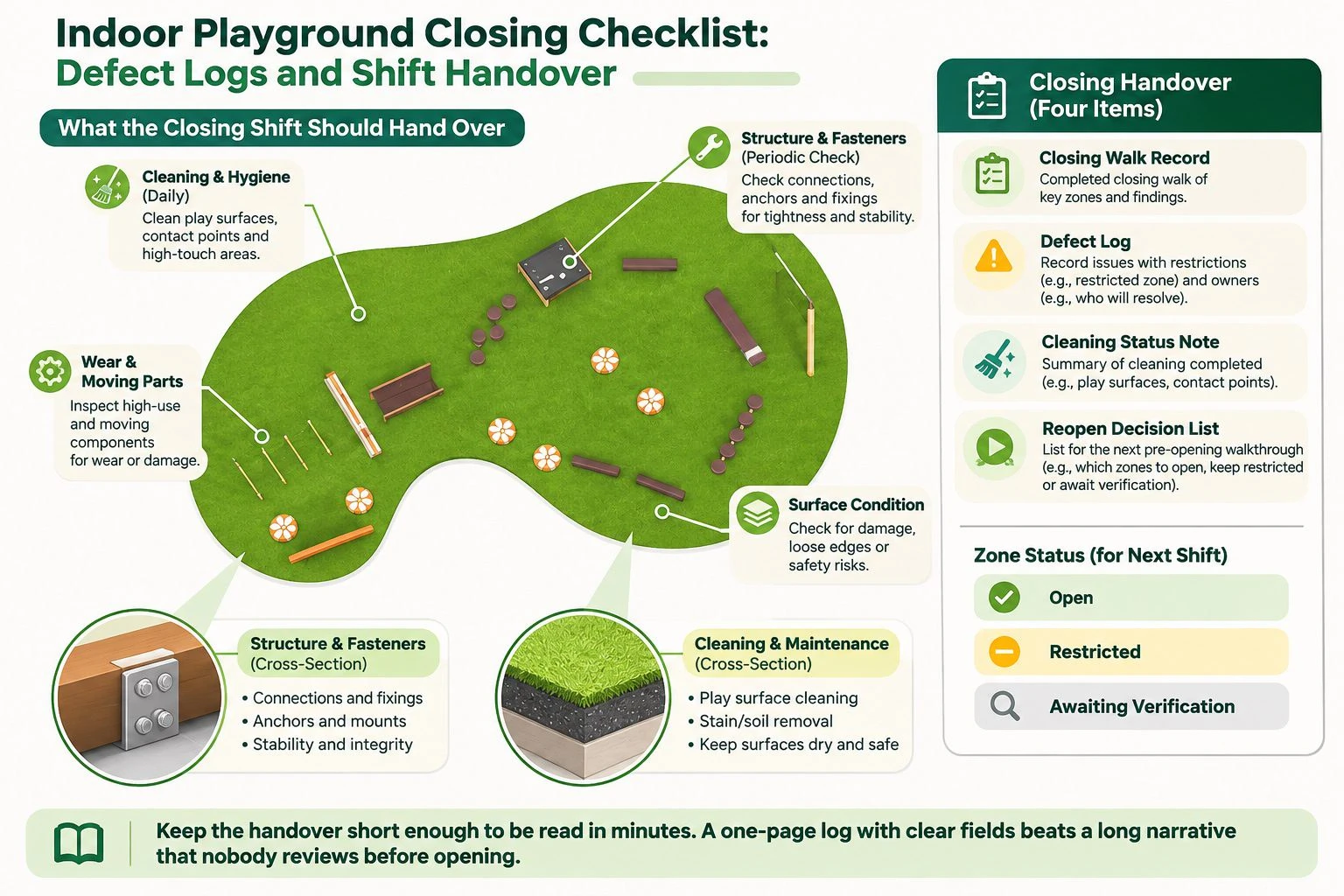
At closing, leave the next shift a record of the zones checked, the equipment still out of use and the person responsible for each open defect. The opening supervisor uses that record to decide which areas can reopen. Keep the checklist, defect log and shift note together so the morning team can make that decision without tracking down the closing staff.
Walk the same route every night
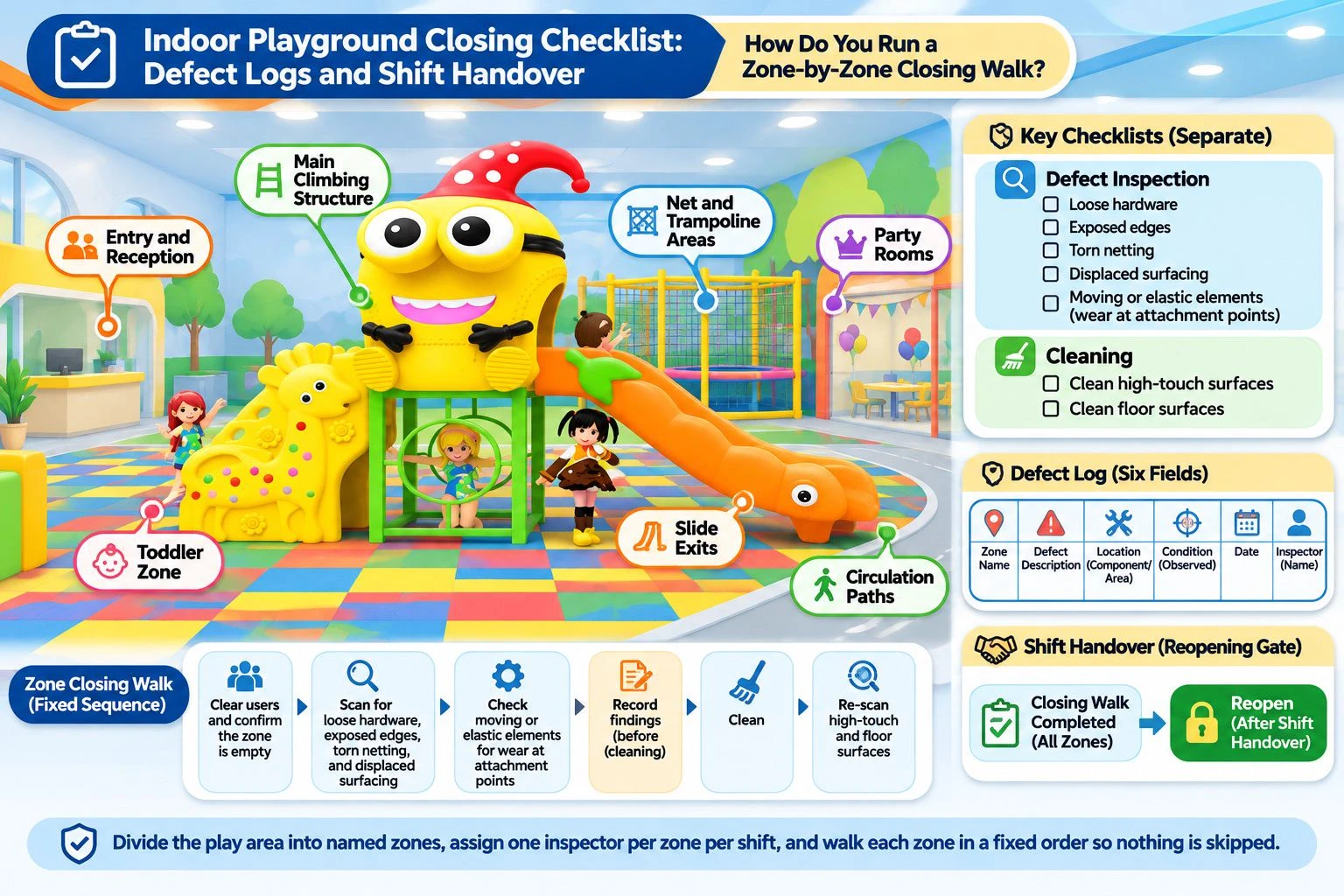
After guests have left, assign staff a route using the zone names and equipment IDs on the floor plan. Include upper decks, tunnels and other places that are hard to see from the entrance. Leave time for a second person to verify the isolation of any area that will stay closed overnight.
| Stop | What to record |
|---|---|
| Entrances, gates and exits | Record any obstructed route or damaged gate and tell the duty manager who will follow up. |
| Slides, climbing areas and soft play | Log visible changes such as loose padding or torn covers against the exact component and equipment ID. |
| Nets and access points | Note the location of any visible tear, gap or displaced barrier. Escalate areas you cannot check from a safe position. |
| Floors and shared areas | Log unresolved spills or damage and record how access to the affected area has been controlled. |
Mark each stop as checked, exception logged or unable to check. Put the defect ID next to an exception. If a stop could not be checked, assign someone to follow up before admitting guests to that area. Compare the venue's checklist with the hazards described in the Public Playground Safety Checklist when you also operate a public playground.
Record each defect so the next shift can act
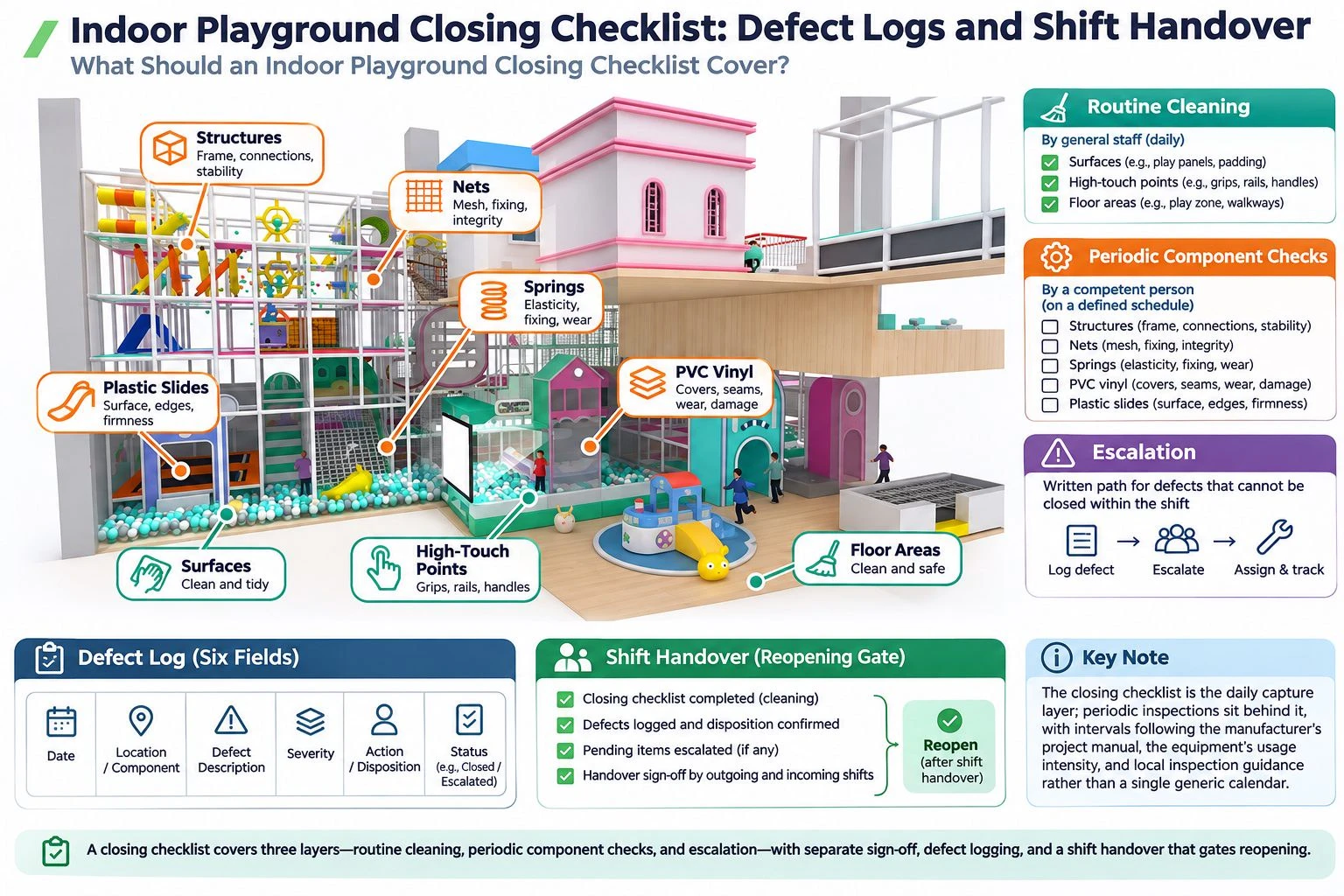
Write the entry while the details are fresh. Use the same asset names on the floor plan, checklist and maintenance record. A photo can help the next shift locate the fault, but the written entry should identify it on its own.
- Location and asset. Record the zone, equipment ID and specific part. Identify the nearest access point if several components look alike.
- Observed condition. Describe what you saw, where it was and when you found it. Leave diagnosis to the person assigned to assess the defect.
- Immediate control. State which route or zone was closed, what barriers were used and who was told.
- Owner and follow-up. Name who will inspect or arrange repair and when they must update the duty manager.
- Work and verification. Record the action taken, the check performed and where the related work record is stored.
- Reopening decision. Record who approved reopening and when. Leave this field open while the issue is unresolved.
Keep cleaning and inspection records separate
Give the cleaning and equipment checks their own sign-offs. When cleaning reveals damage, add the defect ID to the cleaning record so the supervisor can find the full entry. At handover, review the equipment status separately from whether the zone has been cleaned.
Use the installed equipment manuals and applicable venue procedures to decide who can inspect a component, what the inspection includes and when it is due. Keep those documents with the maintenance schedule. NRPA’s CPSI resources
Keep a record of which standards apply to each asset. The public playground equipment specification excludes soft contained play equipment from its scope. If you need a product certificate from a supplier, request the record for the exact model and keep it with the asset file. Use the Product Certification page to identify the program before requesting the record.
Worked example: loose padding at a tunnel exit
During the closing walk, a staff member finds a loose pad at the lower tunnel exit in Zone B. They record the asset ID and pad location, tell the duty manager and isolate access to the affected route. On the handover sheet, the route stays marked closed. The duty manager assigns maintenance to examine the attachment and asks for an update before opening.
At the next shift, the supervisor walks to the tunnel exit and confirms that the barriers still cover every route into the affected area. If the repair and required checks are complete, the authorized person can record the reopening decision. If the part is still on order, the next shift keeps the route isolated and carries the same defect ID forward.
Give the opening supervisor a handover they can sign
Write the handover in the order the opening team will use it. Put closed zones first, followed by locations nobody could check and follow-ups that can wait until after the venue opens. Include the name of the closer and the time of the last walk. If you use a shared digital log, ask the opening supervisor to acknowledge the handover in the same location.
For each open item, say what would change its status. A request for a maintenance update needs a named contact. A zone awaiting inspection needs a time and an assigned inspector. A repaired zone awaiting release needs a named approver. If the incoming supervisor changes the assigned owner or the next update time, record the change beside the original defect ID.
Make the reopening decision before admitting guests
Review the unresolved defects at the start of the shift, then visit the affected locations. For each closed zone, confirm whether the repair is recorded, whether the required verification was completed and whether the designated person has authorized reopening. Keep any affected route isolated until those steps are complete.
If other zones can open independently, walk the guest route with the temporary barriers in place. Check that the remaining route is accessible and that signs make any detour clear. Consider each stage of the guest route, from arrival to the open play area. For further reading, see Beyond the Minimums.
Close the shift note with one line for each unresolved defect. For example, B-014. Lower tunnel route closed. Maintenance to update the duty manager before opening. Barriers remain in place pending verification. Use the same defect ID on the repair order and the reopening record so the next supervisor can trace the decision.