
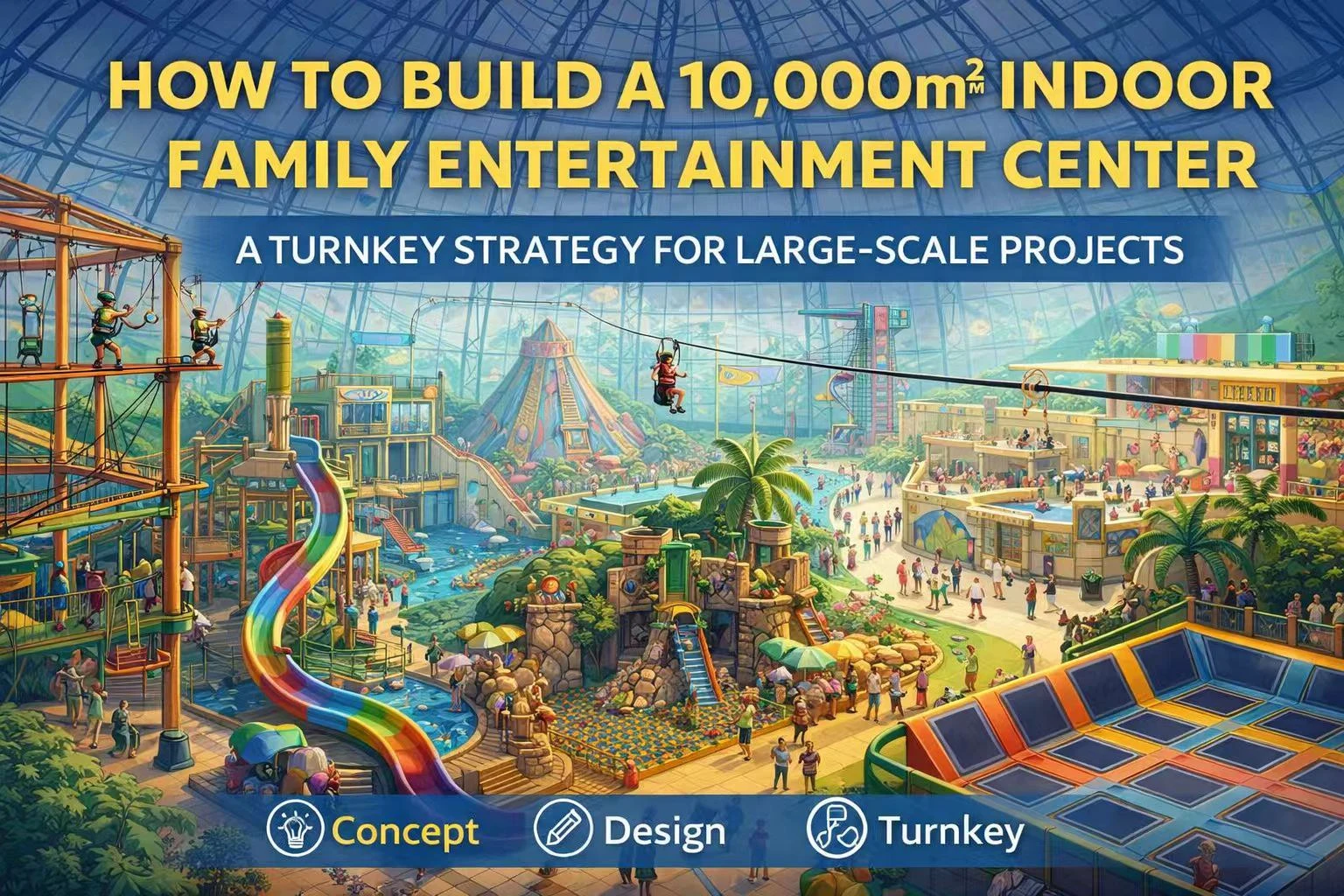
Introduction: From Playground to Destination
In today’s competitive entertainment market, indoor playgrounds are no longer just collections of slides and soft play structures.
Large-scale projects—especially those exceeding 10,000 square meters with high ceilings—require a completely different approach.
They are not playgrounds.
They are destination-level Family Entertainment Centers (FECs) designed to:
Attract families as a full-day experience
Generate repeat visits
Support birthday parties and group bookings
Deliver strong long-term ROI
For investors and developers, the key question is no longer “what equipment to install?”
It is:
👉 “How do we build a complete, profitable entertainment ecosystem?”
Understanding the Scale: Why Large Indoor Parks Are Different
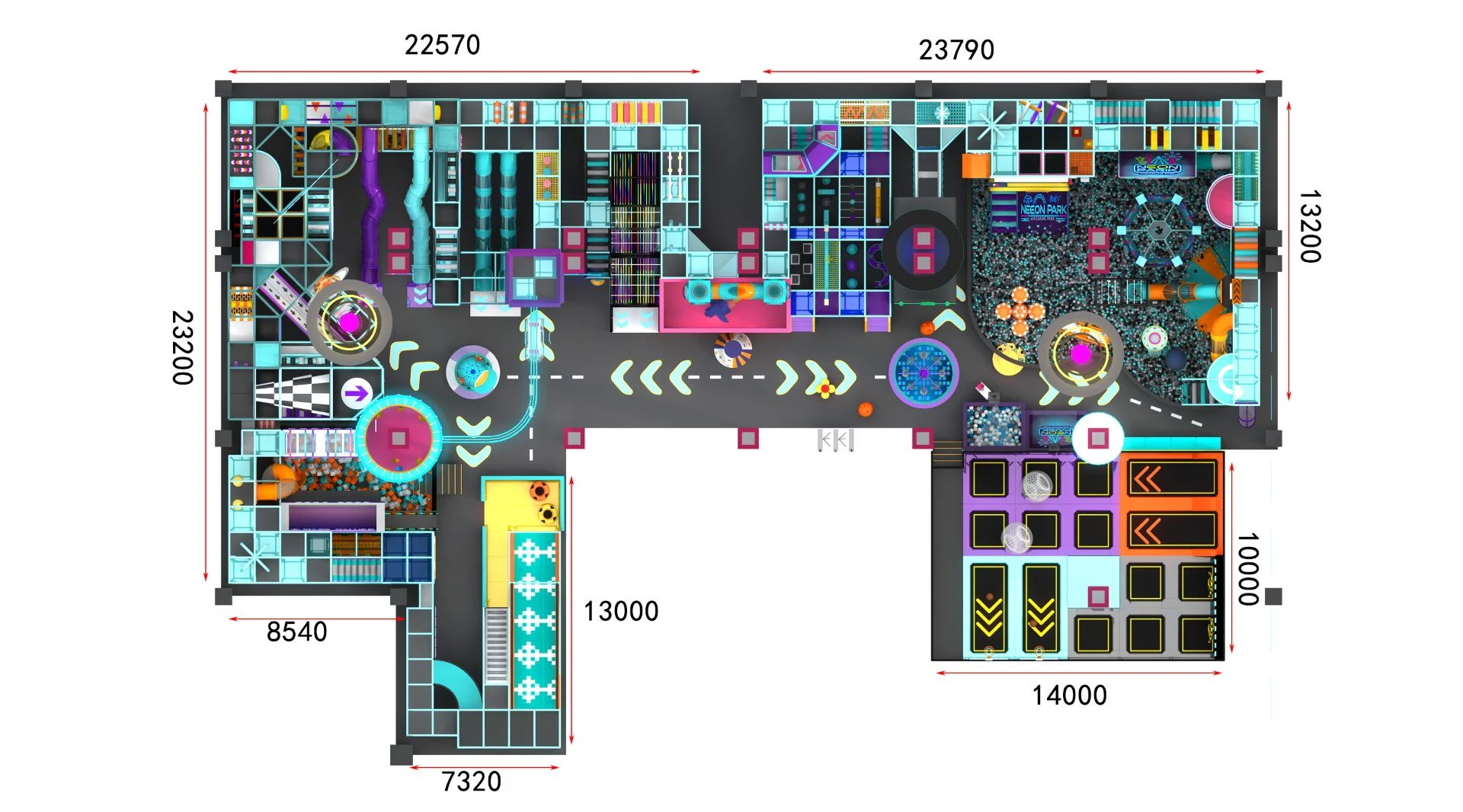
A project with 10,000㎡ floor area and 18m height introduces opportunities—and challenges—that smaller playgrounds simply do not have.
Key Differences from Standard Indoor Playgrounds
| Standard Playground | Large FEC Project |
|---|---|
| 200–1,000㎡ | 5,000–15,000㎡ |
| Low ceiling | High vertical utilization |
| Single attraction type | Multi-zone ecosystem |
| Short stay time | Full-day destination |
| Equipment-focused | Experience-focused |
👉 In large projects, design strategy matters more than equipment selection.
Core Concept: Designing for Experience, Not Just Equipment
A successful flagship indoor park must start with a strong concept.
Three Proven Concept Directions
Immersive Theme Worlds
Ocean, Jungle, Space, or Fantasy City
Strong visual identity
High social media appeal
Hybrid Activity Park
Soft play + trampoline + ninja course + rope course
Appeals to wider age groups
Maximizes throughput
Edutainment + Play
Role play areas
Interactive learning zones
Family engagement spaces
👉 The best projects combine multiple concepts into one integrated experience.
Zoning Strategy: The Backbone of Profitability
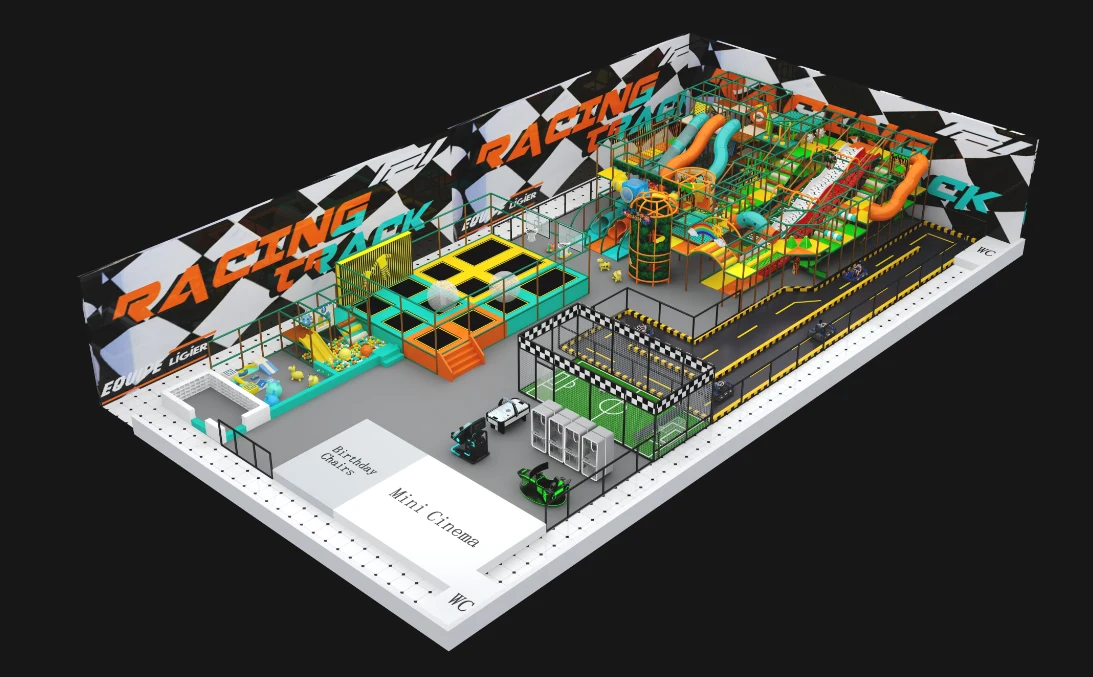
A 10,000㎡ indoor park should never be designed as one open space.
Instead, it must be divided into functional zones, each with a clear role.
Typical Zoning Structure
Toddler Zone (1–4 years)
Soft play, sensory games
Safe, enclosed environment
Parent-friendly seating
Junior Adventure Zone (4–8 years)
Multi-level soft play structures
Slides, ball pits, climbing
Active Zone (6–12+ years)
Trampoline park
Ninja course
Interactive games
High Attraction Zone (All ages)
Rope course
Zipline
Drop slides
Social & Revenue Zones
Birthday rooms
Café / F&B
Waiting & lounge areas
👉 Proper zoning directly affects:
Customer flow
Capacity
Revenue per visitor
Vertical Space Utilization: The Hidden Profit Driver
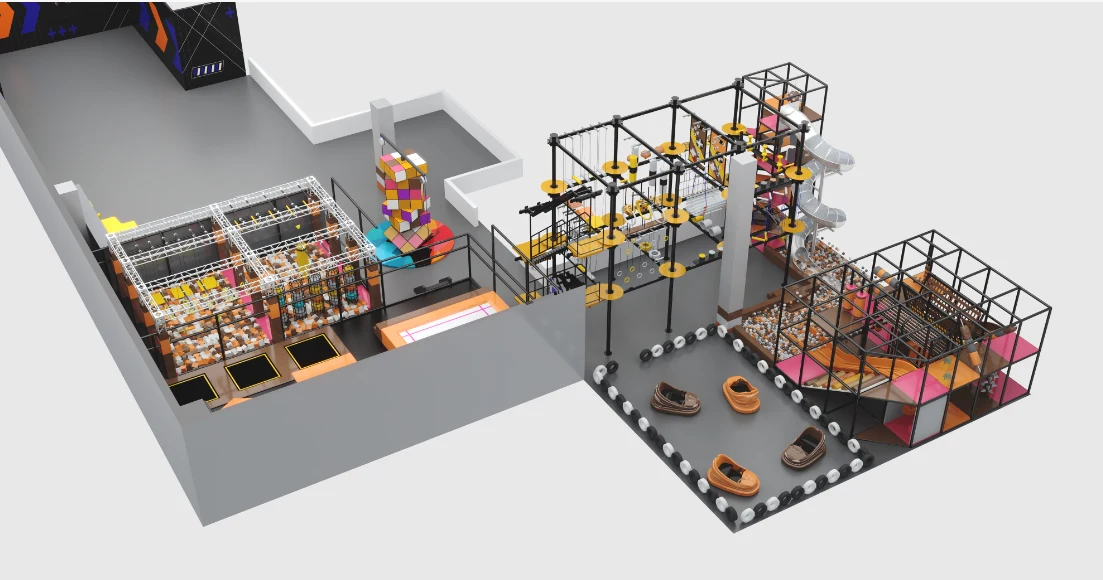
With an 18-meter height, the biggest mistake is underutilizing vertical space.
High-Value Vertical Attractions
Rope courses (2–4 levels)
Indoor zip lines
Spiral and drop slides
Net climbing systems
👉 These attractions:
Increase excitement
Extend stay time
Differentiate your park
Capacity & Throughput: Designing for Real Business
A professional FEC design must calculate:
Simultaneous capacity
Peak hour flow
Queue management
Example (10,000㎡ Project)
Total capacity: 800–1,200 people
Average stay time: 2–4 hours
Daily capacity: 2,000–3,500 visitors
👉 Without proper planning:
Overcrowding reduces experience
Underutilization reduces ROI
Turnkey Approach: Why It Matters
Large projects require more than equipment suppliers.
They need a full turnkey partner.
Turnkey Scope Includes
Concept development
2D/3D design
Engineering drawings
Manufacturing
Logistics & export
Installation supervision
Testing & handover
👉 A fragmented approach leads to:
Delays
Cost overruns
Safety risks
Engineering Considerations (Often Overlooked)
For large indoor parks, technical systems are critical:
MEP & Infrastructure Requirements
HVAC (high-capacity cooling, especially in Middle East)
Power distribution for equipment & lighting
Fire safety systems (sprinklers, evacuation routes)
Structural load considerations
👉 Early coordination avoids expensive redesign later.
Investment Strategy: Multiple Budget Levels
A professional proposal should always include tiered options:
| Level | Positioning |
|---|---|
| Basic | Cost-efficient, fast ROI |
| Standard | Balanced experience & budget |
| Flagship | High-impact destination |
👉 This allows investors to:
Compare ROI scenarios
Adjust strategy without redesign
Customization: Adapting to Unique Structures
Projects inside domes or special architecture require:
Custom layout adaptation
Height optimization
Thematic integration with structure
👉 Standard designs do not work in these cases.
Everything must be custom-built.
Conclusion: Building a Profitable Entertainment Destination
A successful large indoor playground is not about:
❌ More equipment
❌ Bigger slides
It is about:
✔ Smart zoning
✔ Strong concept
✔ Efficient flow
✔ High-value attractions
✔ Professional turnkey execution
About Us
As a professional manufacturer and turnkey provider of indoor playgrounds and FEC projects, we support global clients with:
Customized concept development
Full design and engineering
International project experience
On-site installation support
If you are planning a large-scale indoor entertainment project, our team can help you transform your idea into a high-performing, profitable destination.