







Please contact us!
En

For a commercial indoor playground, the design itself is only the first step. Long-term success depends on daily operation, staff supervision, preventive maintenance, safety signage, and fast emergency response.
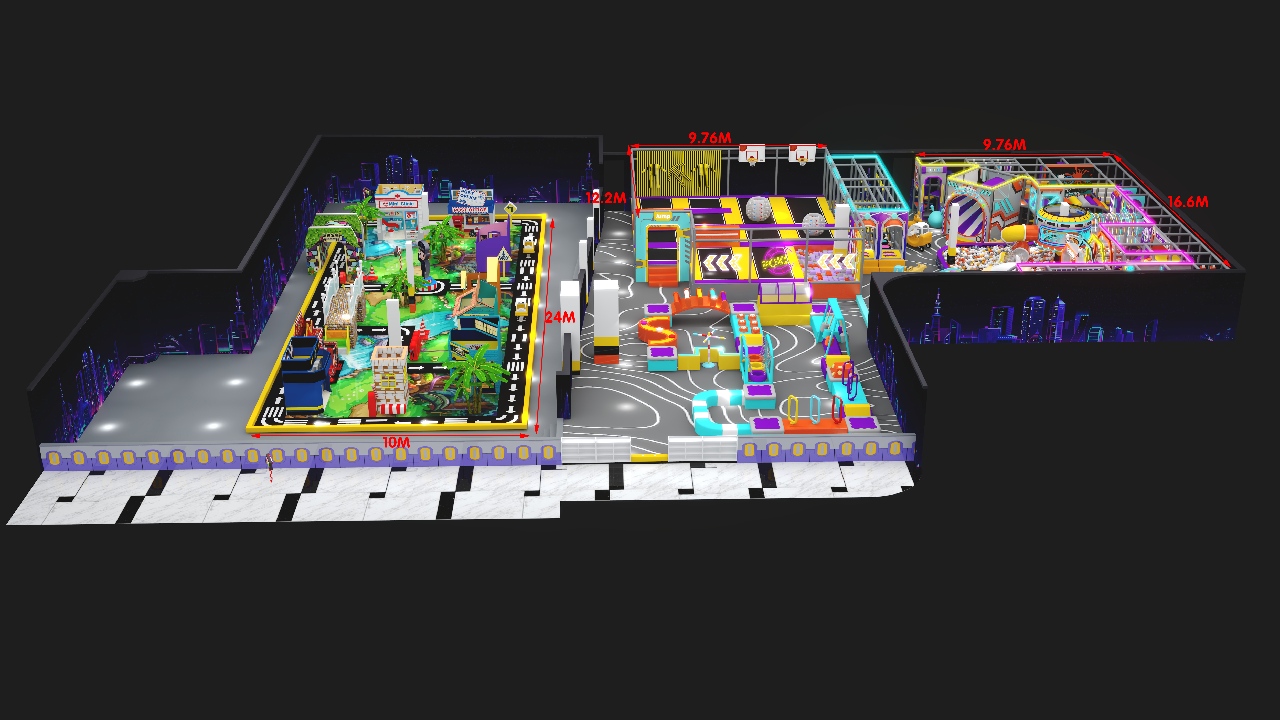
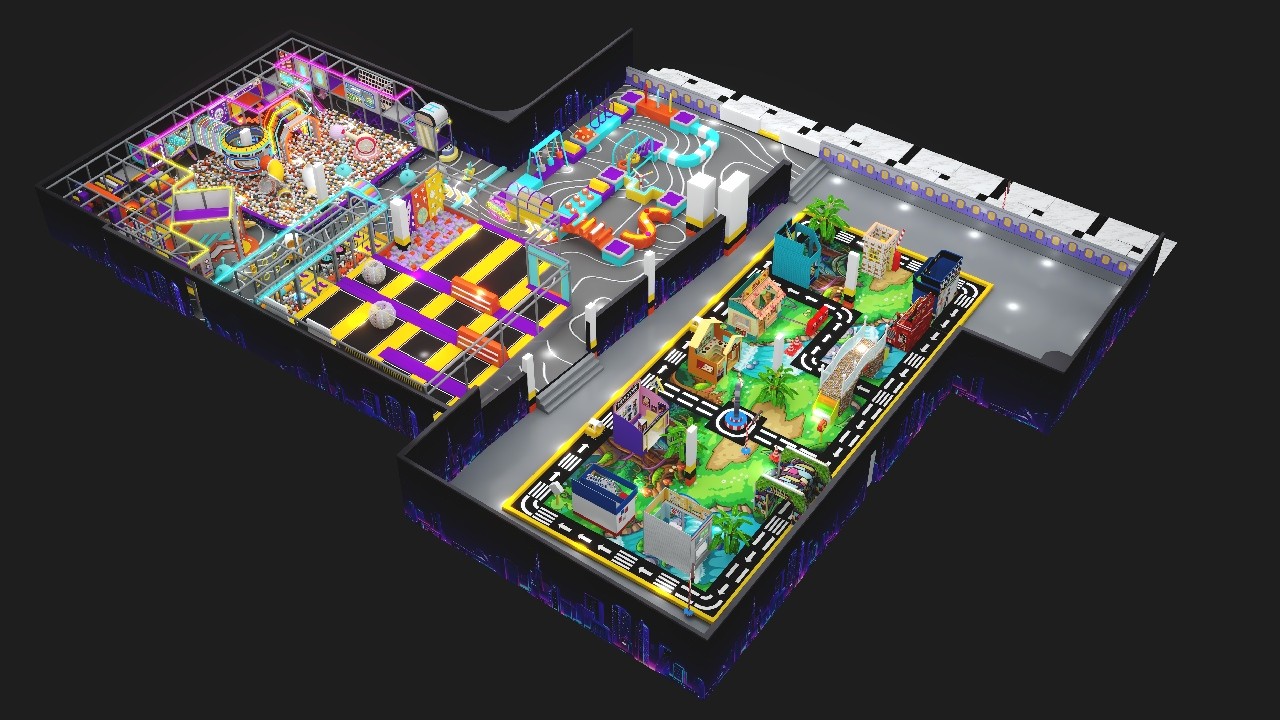
Based on this layout, the park includes several different play zones: a trampoline area, a soft play and ball pool structure, interactive obstacle games, low-age play equipment, a role-play / driving area, and climbing or rope-course elements. Because each attraction has a different risk level, the staffing and maintenance plan should be arranged by zone, not only by total area.
International playground and trampoline safety references such as ASTM F1487, ASTM F2970, EN 1176, and the CPSC Public Playground Safety Handbook all emphasize the importance of proper operation, inspection, maintenance, and supervision after installation. ASTM F2970 covers trampoline court design, operation, maintenance, and inspection, while ASTM F1487 focuses on public playground equipment safety performance.
For this layout, we would recommend 6 to 8 supervisors during normal operation, plus 1 duty manager or floor leader.
A practical staffing plan can be arranged as follows:
| Area | Recommended Staff |
|---|---|
| Trampoline area | 1 dedicated supervisor |
| Rope course / climbing / high-risk challenge area | 1 dedicated supervisor |
| Soft play structure + ball pool + slides | 1–2 supervisors |
| Toddler / low-age play area | 1 supervisor |
| Role-play / driving / city area | 1 supervisor |
| Entrance, guest control, socks, wristbands, rules explanation | 1 staff |
| Floating supervisor / duty manager | 1 person |
During weekends, holidays, birthday parties, or school group visits, the staffing should be increased to 8 to 10 supervisors, depending on visitor volume.
The important point is that supervision should not be calculated only by square meters. A trampoline zone, rope course, slide exit, and ball pool all require more attention than a normal open play area because children move faster and collision risk is higher.
Some attractions should not be left without staff supervision during operation.
The first is the trampoline area. Trampoline parks usually generate more sprains, wrong landings, collisions, and unsafe jumping behavior than ordinary soft play areas. For this reason, ASTM F2970 specifically addresses commercial trampoline court operation, maintenance, and inspection.
The second is the rope course, climbing wall, or harness-based challenge area. If this project includes harnesses, helmets, or clipping systems, a trained supervisor must check the child’s equipment before entry and monitor the activity continuously.
The third is the slide and ball pool area. Children may climb up the slide, block the slide exit, dive into the ball pool, or collide with other children. A supervisor should watch both the slide entrance and landing area.
The fourth is the toddler area, especially when very young children play near older children. ASTM F1487 covers public playground equipment for children from the 5th percentile 2-year-old through the 95th percentile 12-year-old range, so age separation and proper supervision are very important.
The first aid kit should be placed in the central corridor between the main play zones, not inside one single attraction.
For this layout, the best location is near the middle transition area between the trampoline zone, soft play / ball pool zone, and role-play city area. This position gives staff the fastest access to the largest number of activity zones.
We recommend preparing:
One main first aid station near the central staff desk or entrance control point.
One smaller backup first aid kit near the trampoline / climbing area.
Emergency contact numbers and incident report forms at the same location.
A clear internal rule that every incident must be recorded, even if it is minor.
The first aid point should be visible, easy to reach, and not blocked by ticketing counters, shoes cabinets, fences, or party room furniture.
From the layout, the main blind spots are likely to appear in the following places:
| Blind Spot Area | Reason |
|---|---|
| Inside the large soft play structure | Platforms, tunnels, slides, and netted areas can block visibility |
| Ball pool corners | Children can be hidden behind large soft obstacles or slide exits |
| Behind columns | Structural columns interrupt the supervisor’s line of sight |
| Under elevated platforms | Children may hide or rest in low areas |
| Role-play city corners | Small houses, shops, and road decorations can create blocked views |
| Trampoline court edges | Children may sit or fall near padding areas |
| Rope course start / finish point | Staff must check both entry and exit behavior |
To reduce blind spots, we recommend placing supervisors at diagonal viewing angles instead of standing only at entrances. CCTV cameras can help, but they cannot replace floor supervision.
In most indoor parks, the highest incident frequency usually comes from:
Trampoline area
Common issues include ankle sprains, knee injuries, wrong landings, collisions, and children jumping too close to each other.
Slides and slide exits
Children may stop at the bottom of the slide, climb upward, or slide before the previous child leaves the landing area.
Ball pool
The most common problems are hidden collisions, children jumping into the ball pool, lost items, and smaller children being blocked by older children.
Rope course or climbing area
The risk is controllable if harnesses, helmets, and staff procedures are properly used. Without proper supervision, however, this area has a higher safety requirement.
Interactive obstacle equipment
Rotating, swinging, or balance-based games need regular monitoring because children may use them in a way that is different from the design intention.
The most important operating rule is simple: high-speed activities and height-related activities need more active supervision.
The areas that usually require the most frequent maintenance are:
| Attraction | Maintenance Focus |
|---|---|
| Trampoline area | Jumping mats, springs, frame pads, Velcro, foam blocks, netting |
| Ball pool | Ball cleaning, ball replacement, hidden debris, soft obstacles |
| Slides | Slide surface, entrance padding, landing area, side protection |
| Rope course / climbing wall | Harnesses, ropes, carabiners, helmets, anchors, platforms |
| Soft play structure | PU/PVC covers, sponge padding, zippers, Velcro, netting |
| Interactive electronic panels | Sensors, buttons, LED strips, cables, power adapters |
| Role-play area | Small props, wall panels, road mats, decorative parts |
CPSC’s public playground guidance also stresses that purchasing, installation, maintenance, and ongoing safety awareness are all part of playground safety, not separate topics.
For commercial operation, we recommend a three-level maintenance system:
Daily inspection before opening: check obvious damage, loose parts, sharp edges, broken balls, exposed screws, dirty areas, and blocked exits.
Weekly inspection: check trampoline pads, soft play stitching, nets, fasteners, climbing parts, electrical lighting, and high-use touch points.
Monthly inspection: check structural connections, floor fixation, platform stability, slide fastening, rope course hardware, and replacement planning.
The fastest-wearing components are usually consumable or high-contact parts.
These include:
| Component | Reason |
|---|---|
| Ball pool balls | Crushed, dirty, lost, or deformed over time |
| Trampoline mats | Constant jumping and friction |
| Trampoline safety pads | Shoes, impact, Velcro opening and closing |
| Foam pit cubes | Compression and surface damage |
| PU/PVC soft covers | Children climb, crawl, and rub against them |
| Zippers and Velcro | Repeated opening during cleaning and maintenance |
| Safety nets | Pulling, climbing, and long-term tension |
| LED strips | High operating hours and possible impact damage |
| Climbing holds | Repeated grip and foot friction |
| Harnesses and helmets | Must be inspected regularly and replaced when worn |
For a busy indoor park, these parts should be treated as normal operation consumables, not as unexpected quality problems.
We recommend customers purchase a basic spare parts package together with the initial order. This reduces downtime after opening, especially for overseas projects where international shipping takes time.
Recommended spare parts include:
| Spare Part | Recommended Quantity |
|---|---|
| Extra ball pool balls | 3%–5% of total ball quantity |
| Trampoline springs | 3%–5% spare |
| Trampoline mat repair material | 1 set |
| Trampoline safety pad covers | Several pieces for high-use areas |
| Velcro strips | 1 roll or project-based quantity |
| PU/PVC repair material | 1–2 m² in matching colors |
| Safety net repair rope | 1 roll |
| Cable ties / fastening accessories | 1 set |
| LED strip / power adapter | Several spare pieces |
| Foam pit cubes | 3%–5% spare if included |
| Climbing holds | Several spare pieces |
| Harness and helmet spare parts | According to rope course quantity |
This spare parts package is especially important for trampoline, rope course, ball pool, and electronic interactive equipment.
Yes, safety signs are necessary. They help customers understand the rules before using the equipment and reduce disputes during operation.
Recommended signs include:
| Location | Sign Content |
|---|---|
| Entrance | Age range, height limits, socks rule, health warning |
| Trampoline area | One person per trampoline, no flips unless allowed, no sitting on pads, no pushing |
| Ball pool | No diving, no throwing balls outside, younger children need adult attention |
| Slides | Slide feet first, wait for the previous child to leave, do not climb upward |
| Rope course / climbing wall | Helmet and harness required, staff instruction required, no entry without permission |
| Toddler area | Reserved for young children, older children should not enter |
| Emergency exit | Clear exit direction |
| First aid point | First aid kit location and emergency contact |
| Staff-only areas | No guest entry |
Safety signs should use simple wording, icons, and bilingual text if the local market needs it. For Colombia, we recommend at least Spanish + icon-based signs. English can be added if the park receives international visitors.
Yes. If the rope course and climbing wall are included in the final confirmed equipment list, we should provide the required harnesses and safety helmets according to the attraction design and estimated capacity.
Normally, the quantity should be calculated based on:
Maximum number of children allowed on the rope course at one time.
Waiting and turnover speed.
Different child sizes.
Spare quantity for replacement and cleaning rotation.
Local operation rules or insurance requirements.
For example, if the rope course allows 8 children at one time, we normally recommend preparing more than 8 sets, such as 10–12 sets, so the operator has spare units for size adjustment, cleaning, and replacement.
All harnesses, helmets, carabiners, ropes, and connection points must be checked by trained staff before daily opening.
A successful indoor playground is not only about attractive design. It also depends on proper supervision, clear safety signs, preventive maintenance, spare parts planning, and staff training.
For this project, we recommend the customer prepare a professional operation plan before opening, including:
Staff position map.
Daily inspection checklist.
Emergency response procedure.
First aid and incident report system.
Safety signage plan.
Spare parts package.
Staff training for trampoline, rope course, slide, and ball pool operation.
This will help the park operate more safely, reduce equipment downtime, improve customer experience, and protect the investor’s long-term business value.
For this layout, we recommend 6 to 8 supervisors during normal operation, plus one duty manager or floor leader.
During weekends, holidays, birthday parties, or school group visits, the number should be increased to 8 to 10 supervisors, depending on the visitor volume.
The final number should be adjusted according to the park’s actual operating capacity, age group, visitor flow, and local safety regulations.
The following areas should have dedicated supervision during operation:
Trampoline area
Rope course or climbing wall
Slide entrance and slide exit area
Ball pool area
Toddler / low-age play area
High-speed or balance-based obstacle games
These areas involve faster movement, height difference, jumping, sliding, or possible collision between children, so staff should monitor them continuously.
The main first aid kit should be placed near the central corridor or main staff control point, where staff can quickly reach the trampoline area, soft play area, ball pool, and role-play area.
For larger parks, we also recommend placing a backup first aid kit near the trampoline or climbing area, because these zones usually require faster response.
The first aid location should be clearly marked with visible signage.
Yes. Blind spots usually appear in areas where equipment blocks the staff’s line of sight.
Common blind spots include:
Inside the soft play structure
Behind columns
Ball pool corners
Under elevated platforms
Behind role-play houses or decorative structures
Slide exit areas
Rope course entry and exit points
We recommend placing supervisors at diagonal viewing positions and using CCTV as additional support. However, CCTV should not replace on-site supervision.
In most indoor playgrounds, the highest number of minor incidents usually happens in:
Trampoline areas
Slides and slide exits
Ball pools
Rope course or climbing areas
Interactive obstacle games
Most incidents are caused by running, jumping, wrong landing, pushing, children entering from the wrong direction, or different age groups playing together without proper control.
The equipment that usually requires more frequent maintenance includes:
Trampoline mats, springs, and safety pads
Ball pool balls and soft obstacles
Slide surfaces and landing areas
Safety nets and soft play covers
Rope course harnesses, helmets, ropes, and carabiners
Climbing holds and climbing wall fixing parts
Interactive electronic panels, LED strips, and sensors
These areas are used more frequently and receive more physical impact from children.
The fastest-wearing parts are normally consumable or high-contact components, such as:
Ball pool balls
Trampoline mats
Trampoline springs
Trampoline safety pads
Foam pit cubes
PU / PVC soft covers
Velcro and zippers
Safety nets
LED strips
Climbing holds
Harnesses and helmets
These parts should be inspected regularly and replaced when signs of damage appear.
Yes. We strongly recommend preparing a basic spare parts package together with the initial order.
For overseas projects, spare parts are very important because international shipping takes time. Having spare parts on site can reduce downtime and help the park continue operating smoothly.
Recommended spare parts include:
Extra ball pool balls
Trampoline springs
Trampoline mat repair material
Safety pad covers
PU / PVC repair material
Velcro strips
Safety net repair rope
LED strips and power adapters
Foam cubes
Climbing holds
Harness and helmet spare parts
For high-use parts, we normally recommend preparing around 3% to 5% spare quantity.
Yes. Safety signs are necessary for daily operation.
They help guests understand the rules before using the equipment and reduce the risk of accidents or disputes.
Recommended safety signs include:
Entrance rules
Age and height limits
Socks requirement
Trampoline rules
Slide rules
Ball pool rules
Rope course and climbing wall rules
Toddler area rules
Emergency exit signs
First aid signs
Staff-only area signs
For the Colombian market, we recommend using Spanish safety signs with clear icons. English can also be added if the park receives international visitors.
Yes. If the rope course and climbing wall are included in the final confirmed equipment list, we can provide the required safety harnesses and helmets.
The quantity should be calculated according to:
Maximum number of children allowed at one time
Different child sizes
Spare quantity for replacement
Cleaning and rotation needs
Local operation or insurance requirements
For example, if the rope course allows 8 children at one time, we usually recommend preparing 10 to 12 sets of harnesses and helmets.
We recommend three levels of inspection:
Daily inspection:
Before opening, check damaged covers, loose parts, broken balls, exposed screws, dirty areas, blocked exits, and obvious safety risks.
Weekly inspection:
Check trampoline pads, safety nets, soft play covers, slide connections, climbing parts, Velcro, zippers, and electrical components.
Monthly inspection:
Check structural frames, platform stability, fixed points, rope course hardware, floor connections, and major wear parts.
A written inspection checklist should be kept by the operator.
Yes. Age separation is very important for indoor playground safety.
Toddlers should have a separate area away from older children, trampolines, fast slides, and high-speed obstacle games.
For mixed-age areas, staff should control the number of children and prevent older children from running into low-age zones.
No. CCTV is useful, but it cannot replace on-site supervisors.
CCTV helps the operator review incidents and monitor blind spots, but supervisors are still required to guide children, stop unsafe behavior, control traffic, and respond immediately when something happens.
Before opening, all supervisors should receive training on:
Attraction rules
Emergency response
First aid process
Daily inspection checklist
Incident reporting
Cleaning and hygiene
Trampoline operation rules
Rope course and climbing wall safety procedures
Guest communication
For high-risk areas such as trampoline, rope course, and climbing wall, staff should receive special operation training.
The most important rule is:
High-speed, high-impact, and height-related attractions must always be actively supervised.
A well-designed indoor playground still needs proper operation, staff training, inspection, maintenance, and clear safety rules to remain safe and profitable in the long term.
Copyright Wenzhou Dream Garden Amusement Equipment Co.,Ltd | Sitemaps|Xml
| AK 60175900 |
  |
|  |
|  |
|  | Blooloop | TEA | Hague Apostille Certification| Crunchbase | Featured in Vanguard
Please contact us!