







Please contact us!
En

Why execution capability now matters as much as production capacity
For many years, indoor playground manufacturing was primarily product-driven. Success was measured by unit cost, production efficiency, and the ability to replicate standard structures at scale.
That model is changing.
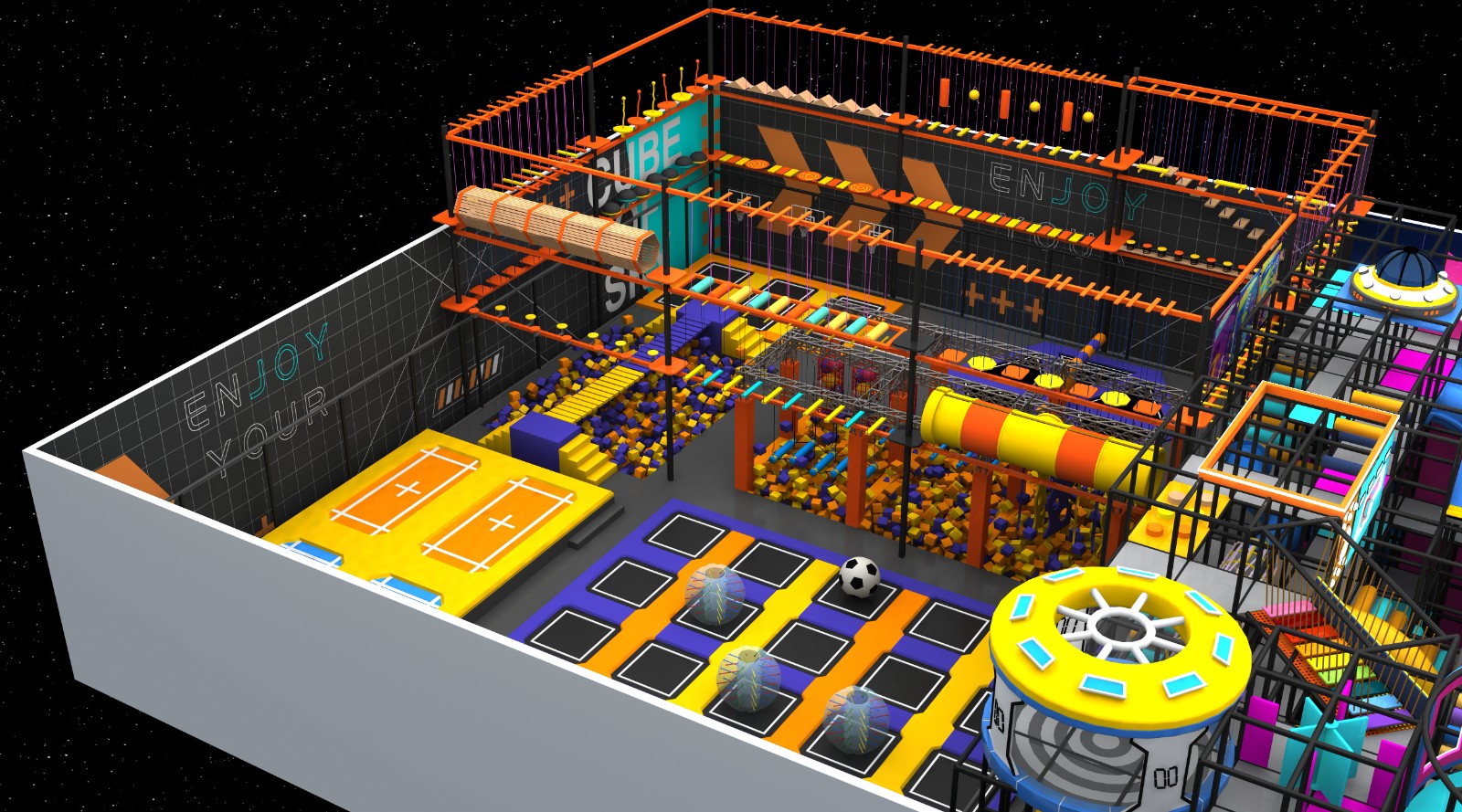
Across global indoor playground and FEC projects, manufacturers are increasingly being evaluated not only on what they produce, but on how their production decisions affect the success of an entire project. This shift marks the emergence of a new industry reality: project-driven manufacturing.
Traditional product-driven manufacturing focuses on:
Individual equipment units
Standardized dimensions and specifications
Cost optimization at the component level
Clear separation between design, production, and installation
This approach works well when projects are simple and risk is low. However, as indoor playgrounds evolve into larger, mixed-use environments, its limitations become more visible.
When manufacturing decisions are made without full project context, issues often appear later — during installation, compliance review, or daily operation.
Project-driven manufacturing does not replace production efficiency. Instead, it reframes manufacturing as part of a larger system.
In a project-driven model, manufacturers consider:
Site-specific layout constraints and circulation logic
Capacity planning and safety spacing at the design stage
Local compliance requirements that affect structure and materials
Installation sequencing and long-term maintenance realities
Manufacturing choices are no longer isolated decisions. They are integrated into how a project is designed, built, and operated.
Several industry forces are accelerating this transition:
Indoor playgrounds increasingly combine soft play, trampolines, arcades, VR, and food service
Regulatory responsibility is higher, especially in cross-border projects
Investors expect predictable timelines and risk control
Mistakes are more expensive as project scale increases
As complexity rises, buyers prefer manufacturers who can anticipate challenges rather than react to them after production is complete.
In this model, manufacturers are not asked to replace designers, consultants, or operators. Instead, they are expected to contribute manufacturing intelligence earlier in the process.
This includes:
Identifying structural or spacing risks before production
Aligning fabrication details with installation conditions
Reducing rework by resolving conflicts at the design stage
Supporting smoother handover from production to operation
The value lies not in additional services, but in fewer surprises downstream.
The move toward project-driven manufacturing is not a trend driven by fashion or short-term market pressure. It reflects a deeper change in how indoor playground projects are conceived and delivered.
As projects grow more complex, the most competitive manufacturers will be those who understand how their production decisions influence the entire project lifecycle.
Product excellence remains essential.
But project awareness is becoming equally critical.
Indoor playground manufacturing is no longer defined solely by output. It is increasingly defined by how well manufacturing integrates with design, compliance, installation, and long-term operation.
Project-driven manufacturing does not eliminate the OEM model — it evolves it.
Manufacturers who adapt to this reality position themselves not just as suppliers, but as reliable contributors to successful global projects.
This article reflects industry observations from a China-based indoor playground manufacturer with international project experience.
Copyright Wenzhou Dream Garden Amusement Equipment Co.,Ltd | Sitemaps|Xml
| AK 60175900 |
  |
|  |
|  |
|  | Blooloop | TEA | Hague Apostille Certification| Crunchbase | Featured in Vanguard
Please contact us!